“Going to Lose My Mind”: The Heartbreaking Truth Behind Amanda Anisimova’s Australian Open Exit

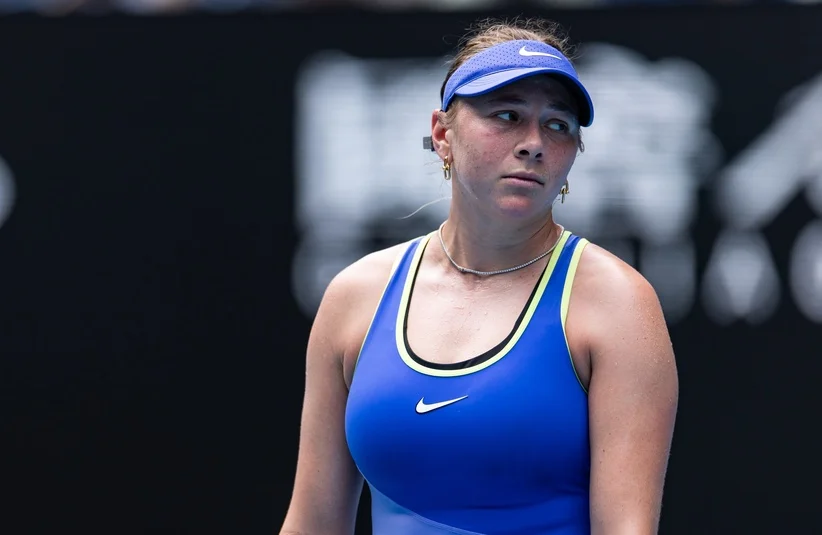
Tennis can be a brutal, lonely sport. There are no teammates to pass the ball to when things go south, and nowhere to hide when the cameras are zooming in on your lowest moments. That reality came crashing down hard this week at the Australian Open, where Amanda Anisimova gave us one of the most raw, unfiltered glimpses into the psyche of a professional athlete we’ve seen in some time.
Following a tough loss that knocked her out of the tournament, Anisimova didn’t just give the standard “I need to work harder” press conference response. Instead, she let the mask slip. The 24-year-old American admitted she felt like she was “going to lose her mind for 48 hours.”
It was a statement that stopped tennis fans in their tracks. It wasn’t just disappointment; it sounded like despair.
The Moment Anisimova Reached Her Breaking Point
For those watching, the match itself was hard-fought, but the aftermath is what will linger in the memory. Anisimova has always been a fighter on the court, known for her aggressive baseline game. But after the final point was played in Melbourne, the emotional dam broke.
When she spoke about losing her mind, she wasn’t speaking in hyperbole. She was articulating the specific, suffocating weight of expectation that seems to follow her every move. This wasn’t just about losing a tennis match; it felt like the culmination of months, maybe years, of trying to claw her way back to the top of a sport that doesn’t offer much mercy.
The raw honesty of her reaction has sparked a wave of concern. It’s a reminder that behind the endorsements and the TV time, these players are young people navigating incredible stress in a public fishbowl.
From Teen Prodigy to the Pressure Cooker
To understand why this exit hit so hard, you have to look at the road Anisimova has traveled. She didn’t just arrive on the tour; she exploded onto it. Back in 2019, as a teenager, she stormed her way to the semifinals of the French Open, knocking out defending champion Simona Halep. The tennis world immediately pinned the “Next Big Thing” badge on her lapel.
But potential is a heavy thing to carry. Since that breakout run, Anisimova has faced a series of hurdles that would test anyone’s resolve. She has dealt with nagging injuries, inconsistent results, and the devastating loss of her father and coach.
In recent years, she has been open about the struggle to balance her professional ambition with her personal well-being. She has stepped away from the sport before to prioritize her mental health—a brave move that garnered her a lot of respect. But coming back is hard. Trying to recapture that teenage magic while the world watches your every error is even harder.
The Unspoken Toll of the WTA Tour
Her comments in Melbourne have reignited a conversation that tennis seems to be having a lot lately: Is the tour sustainable for young stars?
We’ve seen similar scenarios play out with Naomi Osaka and Bianca Andreescu. The relentless schedule, the jet lag, the ranking points defense—it’s a grind. For Anisimova, this Australian Open was supposed to be a stepping stone. It was a chance to prove that she was back and ready to contend for titles.
When that opportunity slipped away early, the disappointment was clearly compounded by the work she had put in to get there. It’s the classic athlete’s dilemma: you sacrifice everything for a moment, and when that moment dissolves, you’re left alone in a hotel room with your thoughts. That’s the “48 hours” of madness she was referring to.
How the Tennis Community is Reacting
In the past, a reaction like this might have been dismissed as a player being “mentally fragile.” Thankfully, the culture is shifting. The response to Anisimova’s exit has been overwhelmingly empathetic.
Fans on social media haven’t been critiquing her backhand; they’ve been hoping she has a good support system around her. Sports psychologists and analysts are pointing to this as yet another example of why player welfare needs to be the number one priority for the associations.
The consensus is clear: We want to see Anisimova win, but more importantly, we want to see her okay.
What’s Next for Amanda Anisimova?
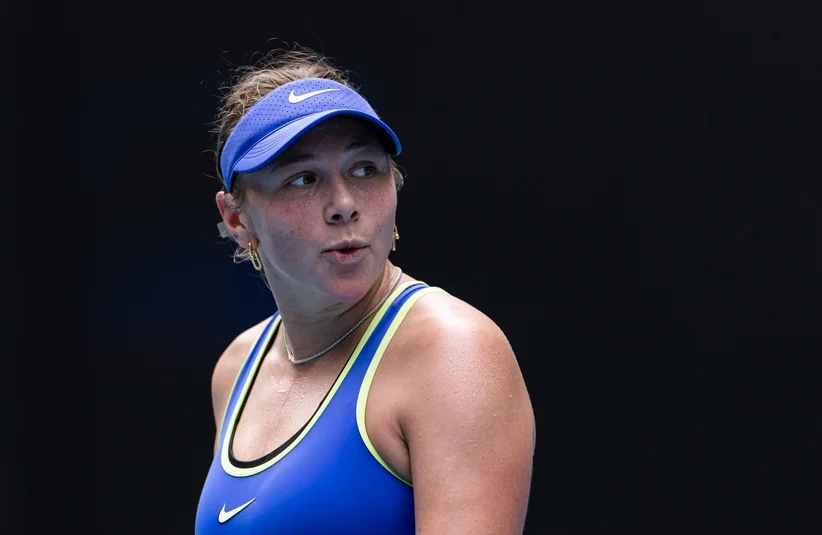
So, where does she go from here? That’s the million-dollar question. Anisimova will almost certainly take some time to regroup. The physical recovery from a Grand Slam is one thing, but the emotional recovery is another beast entirely. She might head home, disconnect from the toxicity of social media, and just breathe for a while.
Her history shows that she knows when to pump the brakes. Whether she bounces back in time for the hard-court swing in the US or decides to take a longer hiatus remains to be seen. Whatever she chooses, her exit from the Australian Open will stand as a stark reminder that athletes are human beings first, and competitors second. We’re rooting for you, Amanda. Take all the time you need.
FAQ SECTION
Q: What happened in Amanda Anisimova’s Australian Open match?
A: She was eliminated after a tough loss, leading to an emotional reaction.
Q: Who is involved?
A: Amanda Anisimova, her opponent, and the broader tennis community reacting to her comments.
Q: Why is this news important?
A: It highlights both her career struggles and the ongoing conversation about mental health in sports.
Q: What are the next steps?
A: Anisimova will focus on recovery and preparation for future tournaments, though her timeline remains uncertain.