
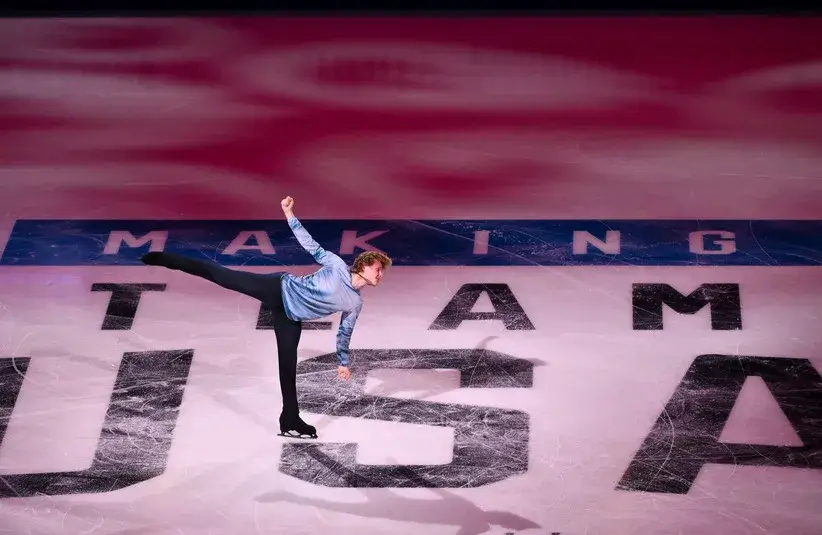
Figure Skating Explained: An Important Guide to Milano-Cortina 2026

Every four years during the Winter Olympics, figure skating takes over our screens. It produces the most viral moments throughout the games. Especially from gravity-defying quadruple jumps to heart-wrenching artistic performances. But for the casual viewer, the mechanics of the sport can be a bit of a mystery. Why did the skater who fell win gold? What exactly is the difference between pairs and ice dance?
As we look toward Milano-Cortina 2026, the excitement is already building. The sport has evolved into a technical arms race, with skaters pushing the boundaries of human physics while trying to maintain the grace of a ballet dancer. It is a brutal, beautiful mix of athleticism and artistry that demands perfection on a surface with zero friction.
Whether you are tuning in for the dramatic team event or following the rise of a new singles star, understanding the competition format makes every performance infinitely more compelling. This primer breaks down the disciplines, decodes the scoring system, and tells you exactly what to look for when the skaters take the ice in Italy.
The Five Olympic Disciplines Of Figure Skating
Olympic figure skating isn’t just one event; it’s split into five distinct medal categories. While they all involve blades and ice, the requirements for each figure skating event are vastly different.
Men’s and Women’s Singles
This is the discipline most people are familiar with. It focuses heavily on individual technical prowess—specifically jumps and spins. In recent years, the men’s discipline (and increasingly the women’s) has become dominated by the “quad revolution,” where skaters attempt jumps with four full revolutions in the air.
Pairs
Pairs skating features a male and female partner performing in unison. This discipline is often considered the most dangerous because of its defining elements: massive overhead lifts and “throw jumps,” where the male partner literally throws the female partner across the ice into a landing.
Ice Dance
Often confused with pairs, ice dance is the ballroom dancing of the skating world. There are no throw jumps and no overhead lifts (lifts must stay below the shoulder). Instead, the focus is on complex footwork, rhythm, deep edges, and the partners’ ability to interpret the music as a single unit.
The Team Event
A relatively recent addition to the Olympic program, the team event sees nations fielding skaters across all disciplines. Results from the short and free segments are combined to determine an overall country winner. It’s a test of a nation’s depth across the board, not just their star power in one category.
How the Competition Works: Short vs. Free
Most figure skating events are a two-part test: the Short Program and the Free Skate.
The Short Program (or Rhythm Dance for ice dancers) is the technical sprint. Lasting roughly 2 minutes and 40 seconds, this segment requires skaters to perform a specific set of required elements. There is very little room for error here; missing a required element can be disastrous for the score.
The Free Skate (or Free Dance) is the marathon. Ranging from 4 to 4:30 minutes, this segment allows for more creative freedom and stamina. This is where skaters try to pack this routine with their hardest jumps and combinations to rack up points.
Advancement through this game is simple: skaters qualify from the short program to the free skate based on their placement. The final podium is decided by the combined total score of both short program and free skate.
Decoding the Scoreboard
Gone are the days of the perfect “6.0” score. Today, figure skating uses the International Judging System (IJS), which is essentially a massive math equation designed to objectively measure a subjective sport.
Technical Element Score (TES)
Every move a skater performs—a triple axel, a level-four spin, a lift—has a predetermined Base Value. If a skater completes the move, they get those points.
However, judges also assign a Grade of Execution (GOE) to each element. This measures quality. Was the landing smooth? Was the jump high? Judges can add to or subtract from the base value based on how well the element was performed.
Program Component Score (PCS)
This is the “artistic” side of the score. Judges evaluate skaters on five criteria:
- Skating Skills: The quality of the glide and edge work.
- Transitions: The complex footwork connecting the jumps.
- Performance: Stage presence and energy.
- Composition: The choreography and layout of the routine.
- Interpretation: Musicality and timing.
The final score is the sum of the Technical score and the Component score, minus any deductions for falls or time violations. This is why a skater who falls on a high-value quad jump might still beat a skater who lands easier jumps cleanly—the math of the Base Value rewards risk.
Frequently Asked Questions
What is the main difference between pairs and ice dance?
The easiest way to tell them apart is to look for the jumps and lifts. Pairs skaters perform overhead lifts and throw jumps. Ice dancers focus on complex footwork and rhythm, with lifts that generally stay below the shoulder level.
How is a fall penalized?
A fall hurts a skater in two ways. First, there is a mandatory deduction from the total score (usually 1.0 point). Second, the judges will significantly lower the Grade of Execution (GOE) for that specific element, reducing the points earned for the jump or spin itself.
Why We Watch
Figure skating is the oldest sport in the Winter Olympic program for a reason. It has survived the transition from the compulsory figures of the early 1900s to the athletic powerhouses of the 21st century.
As we head toward Milano-Cortina 2026, keep an eye on the balance between risk and reward. The skaters on the podium will be the ones who can handle the immense physical pressure of a four-minute free skate while telling a story that captivates the arena. Every jump has a point value, but every performance carries a narrative weight that goes beyond the math.