Blazers Claw Back to .500 Behind Avdija’s Return

It wasn’t about perfection on Sunday night in Sacramento. It was about resilience.
For the Portland Trail Blazers, a team that has spent the better part of the last two months fighting to climb out of an early-season hole, the game against the Kings represented a psychological hurdle. Sitting at 21-22, they were knocking on the door of a .500 record—a benchmark of respectability in the brutal Western Conference. But they had to do it shorthanded, without the veteran steadiness of Jrue Holiday or the scoring punch of Jerami Grant.
They needed a spark. They needed someone to step into the void. On Sunday, that someone was Deni Avdija.
Returning from a nagging back injury that cost him three games, Avdija didn’t just return to the lineup; he carried it. Exploding for 30 points, eight rebounds, and eight assists, Avdija led a young, hungry Blazers squad to a 117-110 victory over the Kings, dragging Portland back to .500 for the first time since mid-November.
Avdija sparks the Blazers’ offense
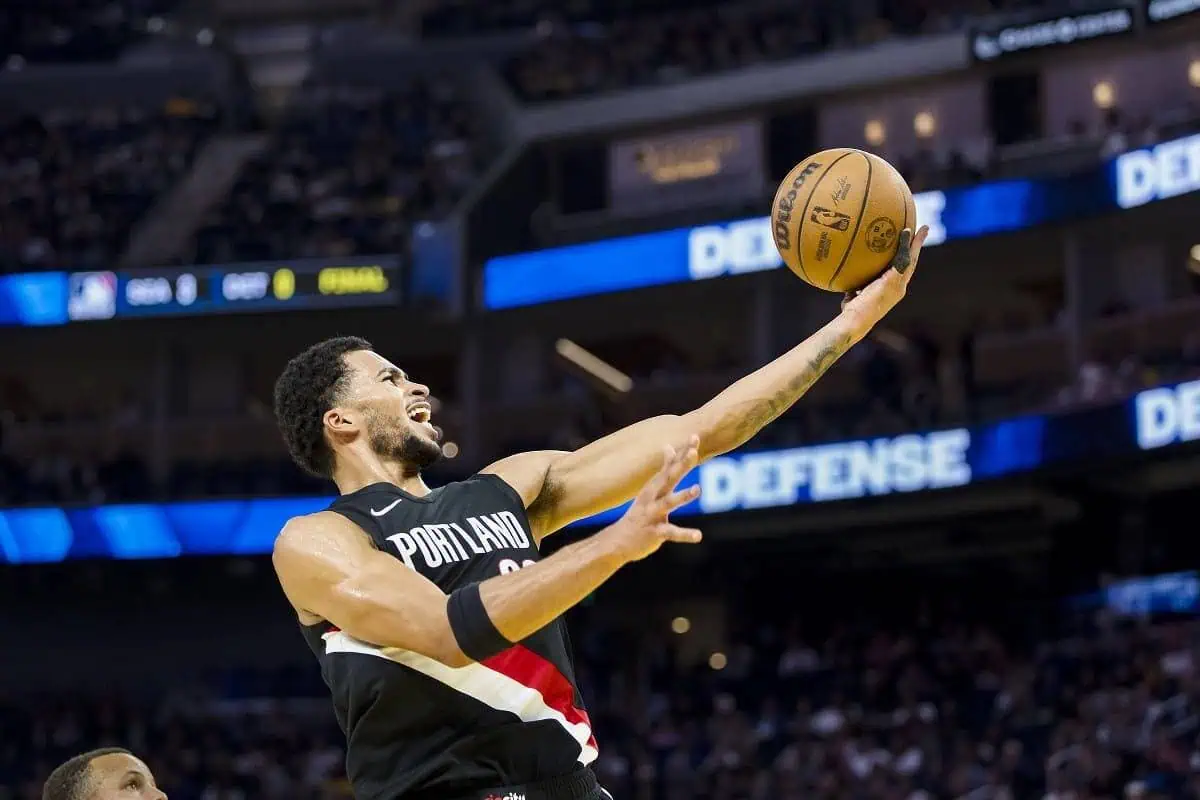
Back injuries are tricky beasts in the NBA. They sap your explosiveness and ruin your rhythm. Yet, watching Avdija drive through the lane at the Golden 1 Center, you would never know he had been sidelined for a week. He played with a desperate energy, attacking the rim and finding open shooters when the Kings’ defense collapsed.
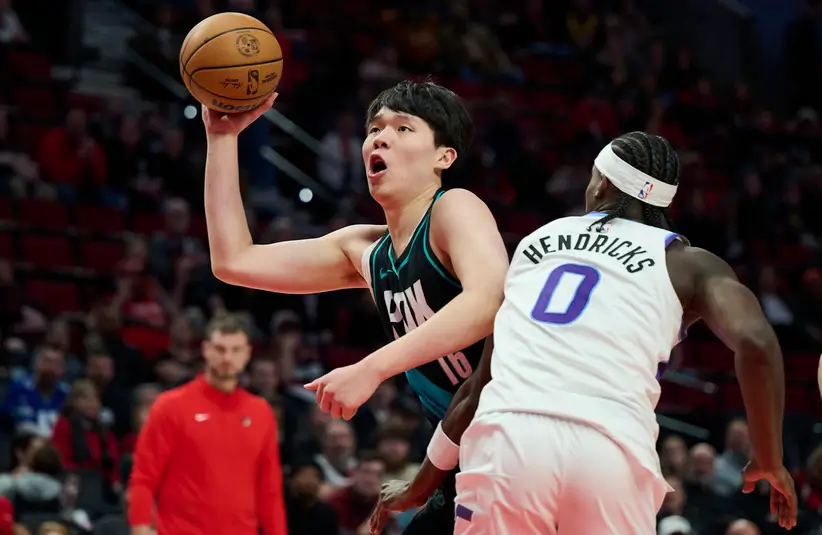
It wasn’t just the scoring volume; it was the efficiency and timing. When Sacramento made its inevitable fourth-quarter push, cutting a 14-point deficit down to single digits, it was Avdija who calmed the storm. His ability to get to the free-throw line late in the game—and actually convert—sealed the deal.
“He looked fine” is an understatement for a performance that might have been his best of the season. For a Blazers team that often relies on perimeter shooting, having Avdija act as a battering ram to the basket changed the entire geometry of the offense.
Clingan dominates the paint for Portland
While Avdija controlled the perimeter, the story in the trenches was the absolute dominance of sophomore big man Donovan Clingan.
The box score shows a monster line: 21 points and 17 rebounds. But the numbers don’t fully capture the frustration he caused for the Kings’ interior offense. Clingan was a wall. He secured key defensive rebounds that ended Sacramento possessions and converted second-chance points that broke their spirit.
Sabonis, usually a triple-double threat, looked pedestrian, finishing with just 8 points and coughing up six turnovers. The Blazers’ ability to neutralize Sabonis was the quiet key to this victory, and that credit largely belongs to the rookie center who refused to back down.
Next man up mentality drives Blazers’ success
This win wasn’t just about two players; it was a testament to the culture developing in Portland. Winning on the road is hard. Winning on the road in the second half of a back-to-back is harder. Doing it without three of your top veterans (Holiday, Grant, and Robert Williams III) is nearly impossible.
Yet, everyone who checked in contributed. Shaedon Sharpe continued his ascent as a legitimate scorer, pouring in 27 points and grabbing seven boards. Toumani Camara chipped in 17 points, playing his usual brand of high-energy defense that pestered the Kings’ guards all night.
The Kings got their points—Malik Monk and Russell Westbrook both dropped 23—but it felt like empty calories. Portland controlled the tempo and the physicality. Every time Sacramento tried to ignite their crowd with a run, a Blazers player made a winning play. A deflection, an offensive rebound, a tough finish in traffic.
What this win means for the Blazers
Winning 12 of their last 15 games, Portland isn’t just a “fun story” anymore; they are a problem for the rest of the league. Getting back to .500 (22-22) is a massive milestone for a group that started slow.
It validates the coaching staff’s message. It proves that the young core—Sharpe, Clingan, Avdija—isn’t just the future; they are the present.
The Kings, meanwhile, are spiraling. Losing to a shorthanded Portland team at home drops them to 12-31, a record that reflects a season quickly slipping away. For Portland, however, the arrow is pointing strictly up. They host Miami next, and for the first time all season, they’ll do it looking at the rest of the league at eye level.