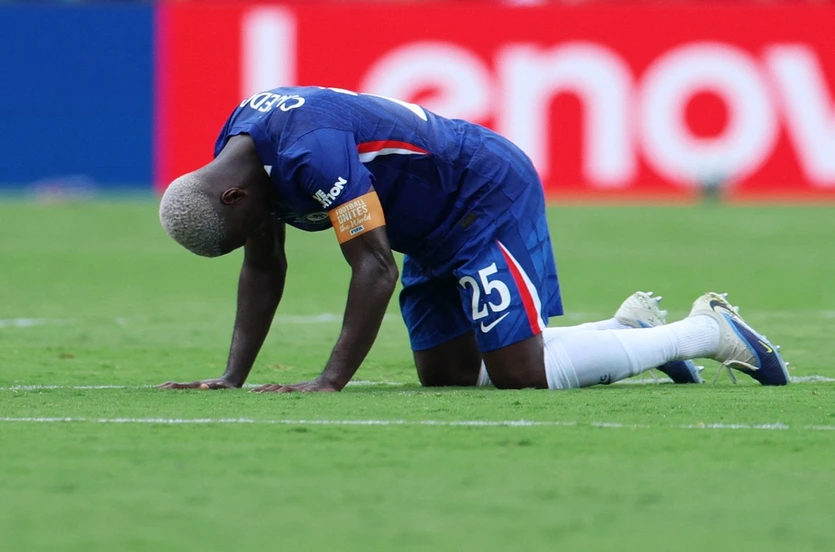
Moises Caicedo Is Burnt Out And Chelsea Are Worried

Chelsea’s engine room is beginning to show cracks. Moisés Caicedo has long been the kind of midfielder managers dream about, aggressive in the tackle, tidy on the ball, and seemingly limitless in stamina. Recent reporting suggests that even the most durable players have a limit.
Caicedo has told close friends and family he feels exhausted by his playing schedule, while FIFPRO’s Player Workload Monitoring report has explicitly named him among those suffering from an unequal workload.
The story matters because it pulls back the curtain on a league-wide problem where top players are being pushed to physical breaking points for the sake of results and revenue.
Why Caicedo’s Case Feels Different Now
Moisés Caicedo arrived at Chelsea carrying enormous expectations and has more than justified his huge transfer fee with consistent performances that have masked the price paid. He’s one of the best defensive midfielders in the world, alongside Declan Rice
Recent data in the FIFPRO workload study show Caicedo made exceptional travel and match commitments across club and country last season, including long-haul travel and near continuous minutes.
That report quantified how some players were asked to play four matches in 14 days while crossing continents and spending an extraordinary number of hours in transit. Those figures are not just trivia. They explain why players are arriving for training with less recovery time and why staff are playing catch-up to mitigate injury risk.
Chelsea now faces a practical dilemma. Head coach Enzo Maresca has relied on Caicedo heavily this season in both the Premier League and the Champions League. The midfielder has been central to the team’s structure.
Recent match events mean Caicedo will also miss games through suspension after a red card incident. That enforced absence has opened a conversation within the club and across the sport about when rotation becomes protection and when it becomes failure.
Managers who prize consistency need to balance immediate performance against long-term availability. Reuters reporting on Chelsea’s selection choices underlined how integral Caicedo has been this campaign while also noting the strain his schedule has created.
What The FIFPRO Report Actually Shows
FIFPRO’s Player Workload Monitoring report is blunt in its conclusions. Using a database of player minutes, travel logs, and recovery windows, the union highlighted that elite players are being exposed to sustained periods of match congestion without the minimum protections that other professional sports take for granted.
The report shows clusters of excessive travel followed by immediate competitive matches and points to increased injury and burnout risk when recovery windows fall below accepted thresholds.
FIFPRO’s call is not ideological. It is a clinical snapshot that links workload to measurable health and performance risks. This uses case studies to demonstrate how even the brightest prospects can be undermined by calendar overload.
The implications reach far beyond one club. National team call-ups, commercial tournaments, and new competitions have stretched an already crowded calendar. Players who represent both club and country are especially vulnerable.
FIFPRO’s recommendations center on clearer limits to competitive exposure, better coordination between governing bodies, and enforcement of minimum off-season and pre-season windows.
That approach would force stakeholders to share responsibility for protecting players. Evidence in the report suggests ignoring those fixes will grow the costs over time in both human and sporting terms.
What This Means For Chelsea And For Player Welfare
Chelsea must decide if short-term targets are worth the long-term risk to a player who has quickly become one of their most important assets, if not the most important. Rotation is not a new idea in football.
Modern science supports strategic rotation when it is planned and when the coaching staff is confident in alternatives. Recent coverage shows Maresca weighing different options to replace Caicedo while the club manages injuries and suspensions across the squad.
Romeu Lavia is a formidable backup, but the French International has had a poor injury record. From a wider perspective, the conversation around Caicedo resonates with a growing chorus of voices.
Medical and performance professionals quoted in analysis pieces and commentary say the mismatch between matches played and recovery time is widening. Fans will always want their best players available on big nights. Owners and broadcasters will continue to maximize fixtures.
A middle way requires structural reform. FIFPRO’s data-driven warning is a lever for those reforms because it translates anecdote into evidence. If clubs and governing bodies ignore that evidence, the consequence could be more frequent long-term injuries and shortened careers for players who should be the future faces of the game.
Practical Steps That Could Reduce The Strain
Rotation policies that are backed by workload data will be essential. Clubs should invest in monitoring systems that combine GPS workload metrics, sleep data, and travel logs to make selection decisions that protect players.
Governing bodies must coordinate calendar plans to ensure minimum rest periods between international competitions and domestic seasons. Fans and media can also play a role by accepting planned rest for key players as a sign of intelligent management instead of weakness. The FIFPRO evidence suggests such steps would not lower the quality of football. It would ensure players perform at higher levels more consistently across longer careers.
Moisés Caicedo is not the only player affected, but his situation is a clear warning. Chelsea will have to manage his minutes carefully if they want him fit for the season run-in and for the major tournaments that matter to both club and country. The debate now is whether the sport is willing to make the small structural sacrifices necessary to protect players at scale.
The alternative is predictable. More good players will hit physical limits earlier than expected, and clubs will pay the price when form and fitness leave the pitch.