Cristiano Ronaldo Is 12 Years Younger Than His Age According To Whoop — The Science Behind A 28.7 Body At 40

Cristiano Ronaldo has always been marketed as someone who trains like a machine and lives like an elite athlete. The latest data from Whoop, the wearable company he partners with, adds a new chapter to that narrative.
Whoop’s analysis estimates Ronaldo’s physiological age at 28.7 years, while his chronological age is 40. That gap is startling on paper and enormous in sporting terms. This article unpacks what that number actually means physically and practically, looks at how Whoop arrives at such a conclusion, and explains why this matters for Ronaldo and sports science more broadly.
What Whoop Measured And Why It Matters
Whoop estimates physiological age by combining biometric markers such as heart rate variability, sleep quality, resting heart rate, daily strain, and metabolic indicators into a composite score that maps to an expected age for those metrics.
For Ronaldo, the result returned a physiological age of 28.7, which is roughly 12 years younger than his birth year age of 40. That figure is not a magic number that rewrites biology. It is a data-driven estimate showing his body performs like that of the average person in their late 20s across the metrics Whoop tracks.
Why does this matter beyond headline value? Professional sport is about margins. A lower physiological age suggests superior recovery capacity, resilience to training load, and better cardiovascular and metabolic control.
Those advantages translate to higher availability for training and matches, faster bounce back from exertion, and a reduced risk profile for overuse injuries when managed well. Seeing a 40-year-old perform like someone in their late 20s forces teams, sports scientists, and players to reconsider how long elite performance can be sustained with the right regime and monitoring.
How Reliable Is The 28.7 Figure

Wearables are powerful but not perfect. Whoop uses validated sensors and algorithms, but each device and model has assumptions. The physiological age output depends on baseline population data, the specific biomarkers chosen, and how they are weighted.
For elite athletes who follow regimented recovery diets and training routines, the data can show a pronounced advantage, but must be interpreted alongside clinical testing and professional assessment. In Ronaldo’s case, Whoop’s public material notes they looked at multiple markers, including sleep strain and metabolic metrics, to reach their estimate. That breadth improves confidence compared to single-metric claims.
Real-world validation matters. Cristiano himself reacted to earlier Whoop findings in public interviews and in posts, saying the data does not lie and joking about playing for another 10 years.
Independent scientists would want to see raw longitudinal data, peer-reviewed metabolic panels, and stress testing before claiming a definitive reversal of biological aging. Wearable estimates are best treated as credible indicators, not absolute diagnoses.
What Ronaldo Does Day To Day That Shows Up In The Data
Ronaldo’s routine is widely reported and aligns with the metrics that Whoop highlights. He follows strict sleep schedules and prioritizes quality sleep, which boosts recovery scores and heart rate variability. Training sessions include targeted strength work, explosive power drills, and football-specific conditioning that raise his daily strain but also build resilience.
Nutrition is highly controlled and includes attention to metabolic health, which can show up in markers such as glucose regulation and resting heart rate. Controlled recovery modalities such as cryotherapy, contrast baths, and monitored load management reduce accumulated fatigue, making a big difference over a season.
That combination produces the low resting heart rates, high heart rate variability, and consistent recovery percentages that tilt physiological age downward.
Sports science teams at elite clubs and with national squads routinely try to recreate these conditions for other players. The challenge is scale and individual variation. Not every player has Ronaldo’s genetic access to staff or willingness to adhere to such a rigid lifestyle. The Whoop result, therefore, highlights what is achievable rather than what is automatically repeatable across every athlete.
His rival Messi is also still going strong and looks like he’s in his late 20s. He has completed his 1300 career goal contributions with Inter Miami, and doesn’t look like stopping anytime soon.
What The Verdict Means For Ronaldo’s Career And For Football
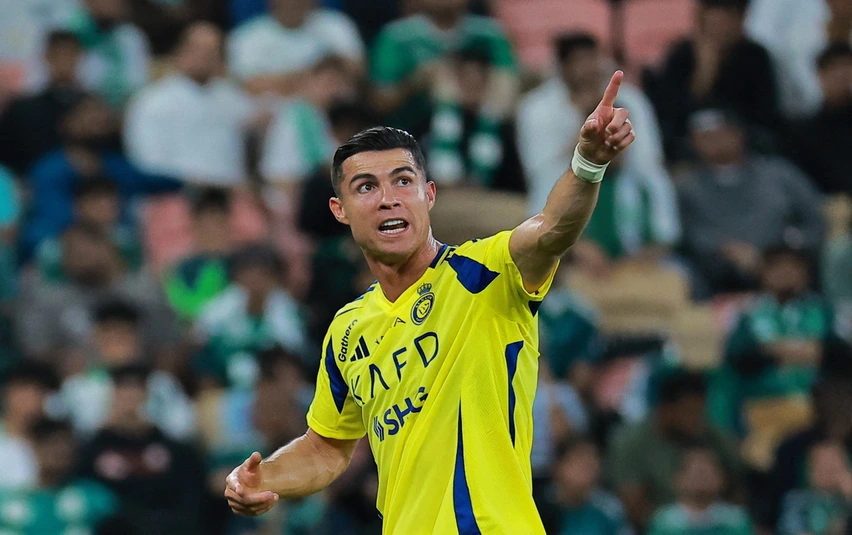
Ronaldo currently plays for Al Nassr in the Saudi Pro League and remains one of the highest-profile examples of longevity in sport. There was no stopping in his prime years at Manchester United and Real Madrid, and it looks like there won’t be for another couple of years.
A physiological age of 28.7 suggests the days when teams counted on a natural decline at 33 or 34 may be outdated for athletes who adopt advanced monitoring, disciplined recovery, and data-backed lifestyle changes. Ronaldo’s public optimism about continuing for many more years aligns with that data and helps explain why clubs and sponsors continue to invest in older superstar athletes who maintain elite metrics.
Wearable data does not measure decision-making or propensity for acute contact injuries during matches. Fans and pundits should celebrate the science but expect realistic limits. Even with elite physiological numbers, there will be seasons with a dip in form and injuries. Looking at Whoop’s estimate as a signal rather than a guarantee is the healthiest lens.
Final Takeaway
Whoop’s estimate that Cristiano Ronaldo sits at a physiological age of 28.7 at 40 years old is headline-worthy and scientifically interesting. The number validates the visible reality that Ronaldo trains smarter, recovers harder, and manages nutrition with elite intent.
Wearables cannot replace clinical evaluation, but they provide a practical window into the body that teams and athletes can use to push boundaries responsibly. The broader implication is clear. With the right mix of monitoring, training, and lifestyle, an athlete’s performance window can be extended well beyond traditional expectations.
That shift will change contract debates, player market value, and how clubs plan for long-term performance windows. Cristiano Ronaldo stands as both an outlier and a roadmap. His Whoop numbers are monstrous by common standards and believable given his routine.