Debate Erupts Over Piastri’s 10-Second Penalty in São Paulo

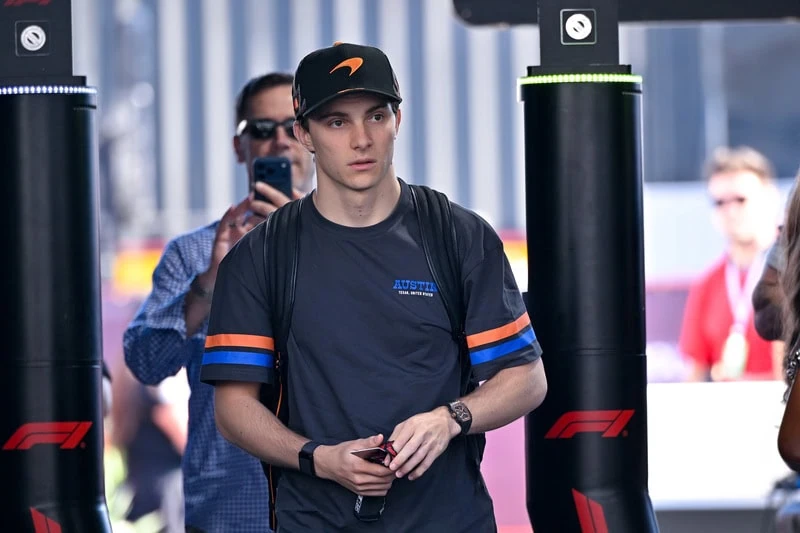
As 16 drivers went head-to-head racing against the clock for a top spot in the São Paulo GP, it was an all-out dogfight filled with chaos, and for one driver, a costly mistake that led to a 10-second penalty. That driver was Oscar Piastri. The controversial words attached to the blunder from onlooking stewards must have felt like a punch to the gut.
This penalty has sparked widespread animosity, with the F1 paddock buzzing and fans furiously debating online. Was it a just call, or did the stewards get this one spectacularly wrong? I’m leaning towards the latter.
It was a classic case of sticking to the rulebook so rigidly that the spirit of racing bled on the grid. From the outside looking in and of course watching the chaos unfold at Turn 1, it looked like textbook, hard-nosed racing. But let’s break it down.
The Anatomy of the Turn 1 Melee
It all kicked off at the Lap 5 Safety Car restart. Kimi Antonelli, got a bit of wheelspin as he mashed the throttle. In Formula 1, a moment’s hesitation is an open invitation, and both Charles Leclerc and Oscar Piastri were ready to RSVP. Like a pincer movement, Leclerc bolted for the outside line, trying to sweep around Antonelli.
Piastri, ever the opportunist, saw a car-sized gap on the inside and dove for it. It was a beautiful, aggressive move, the kind that makes you hold your breath. Three cars barreling into one of the trickiest corners on the calendar. What could go wrong?
This is where the story gets messy. Piastri was committed. He had the run, he had the inside line, and he was alongside Antonelli. According to the unwritten laws of racing, that corner was partly his. But three into one simply doesn’t go, and as they converged, the inevitable happened. Contact.
Leclerc, on the outside of this high-speed sandwich, was the unlucky victim. He got squeezed, spun around, and his race was effectively over before it had truly begun. It’s a heartbreaking sight, watching a car as iconic as a Ferrari pirouette into the runoff. My heart went out to Charles; he had no part to play in the initial action but paid the ultimate price.
Was Piastri Really the Villain?
The stewards, in their infinite wisdom, pointed the finger squarely at Piastri. They looked at their guidelines, saw that Leclerc was punted out, and slapped the Aussie with a 10-second penalty. On paper, I can see their logic. A car was eliminated, and someone had to be at fault.
But motorsport isn’t black and white. It’s a chaotic dance of grey areas, split-second decisions, and gut feelings. Piastri didn’t just materialize on the inside. He earned that position with a fantastic restart. He was alongside Antonelli, which, by modern racing standards, gives him a right to that piece of asphalt.
Ambition or Recklessness?
Was it ambitious? Absolutely. Was it reckless? I don’t think so. It was a racing incident, plain and simple. It was the unfortunate yet thrilling consequence of three hungry drivers fighting over the same piece of real estate.
To penalize Piastri feels like punishing a driver for being a racer. We spend all season begging for wheel-to-wheel action, for drivers to take risks and show their teeth. Then, when they do, we slap them on the wrist. It sends a mixed message, and it frankly sterilizes the sport we love.
Final Thoughts
The real culprit here, if you can call him that, was Antonelli. His slight mistake on the restart created the vacuum that sucked the other two in. But you can’t penalize a driver for a touch of wheelspin. It’s just part of the game.
That’s why this entire sequence screams “racing incident.” No one driver was wholly or predominantly to blame. It was just one of those things. It feels like Oscar Piastri was made the scapegoat, a convenient target to close the case on Leclerc’s early exit. While I understand the need for consistency, this felt like an overreach.
The penalty was harsh, and it soured what should have been remembered as a gutsy piece of driving from one of the grid’s brightest young talents. Racing is about risk, and sometimes, those risks don’t pay off. Punishing the attempt feels like a step in the wrong direction for Formula 1.