Pep Guardiola’s Former Players Are Now Ruling Europe’s Biggest Clubs

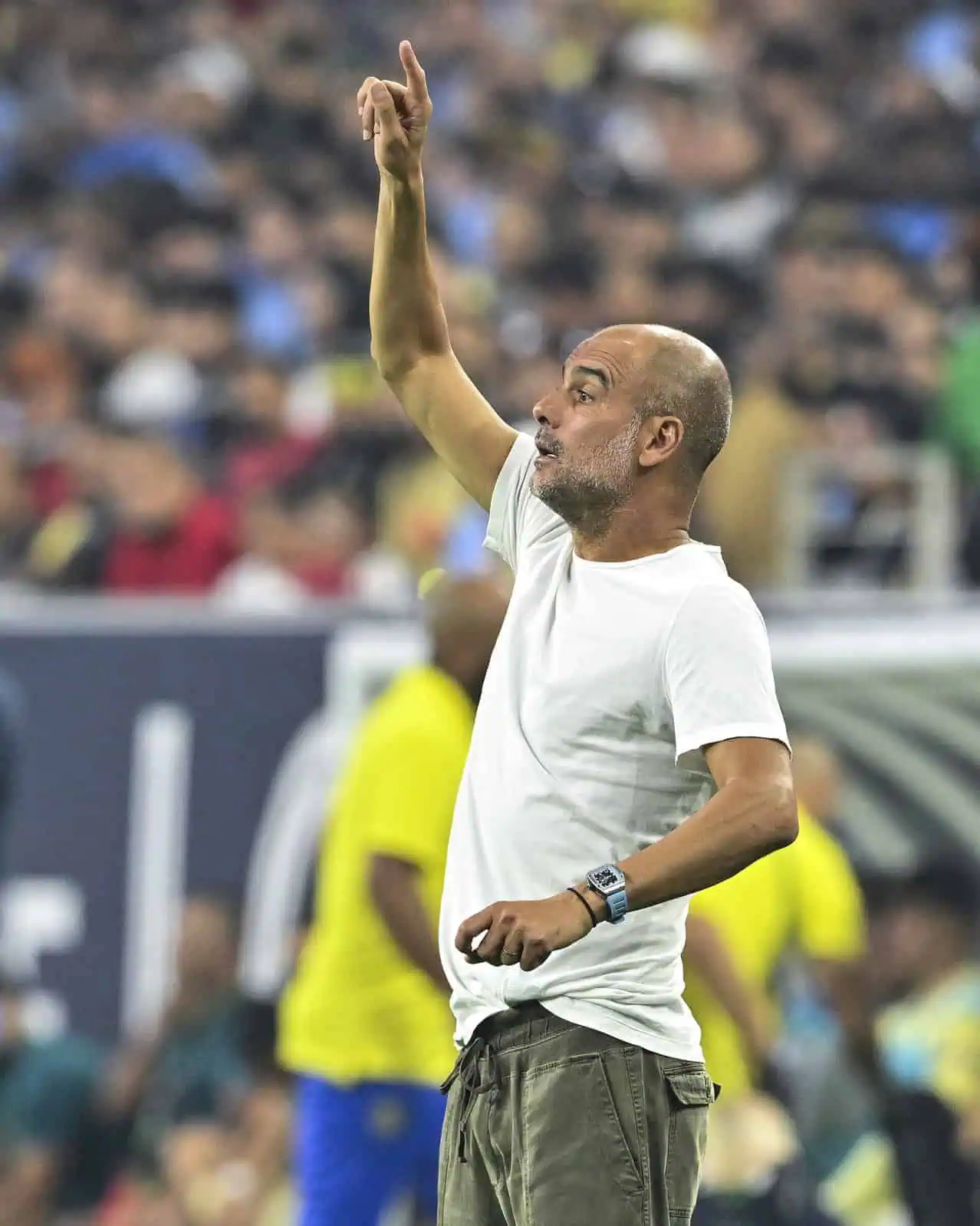
There are many ways to explain why so many managers connected to Pep Guardiola are running Europe’s elite clubs at the same time. The simple version is that they all speak a common football language built on positional play, pressing triggers, and intense control of the ball and space.
That language has forked into distinct dialects under different pupils and former players, yet the grammar remains Pep’s. Tactical analysts have tracked how Guardiola’s ideas have spread across the Premier League and into Europe, from the box-to-box midfield and inverted full-backs to more recent evolutions around rest defense and control without chaos.
The league itself has publicly credited his influence on how English football thinks and trains, a shift that has made the top level faster and smarter. The coaching pipeline itself is well-documented. Mikel Arteta worked as Guardiola’s assistant for three and a half years before taking Arsenal. Enzo Maresca coached within Manchester City’s structure and adopted a possession-first model that mirrors Pep’s principles.
Two other heads of super clubs actually played under Guardiola and chose to learn at close range in their final years. Xabi Alonso said explicitly that he went to Bayern to learn from Pep, a line that has aged well now that Alonso is making major calls from Real Madrid’s bench.
Mikel Arteta’s Arsenal Are Setting The Pace
Mikel Arteta’s Arsenal are not a carbon copy. The framework is Guardiola’s, but the application is Arteta’s. Arsenal lean into wide overloads, ferocious pressing waves, and an obsession with set-piece gains, a notable divergence from Pep’s City this season.
Analysts who follow coaching detail have shown how Arteta has expanded the model rather than merely borrowing it, blending positional play with English tempo and muscular duels.
The updated context matters. As of today, Arsenal sit at the top of the Premier League table after ten matches with an 8-1-1 record and a goal difference of plus 15.
The pack is tight behind them, yet the Gunners have earned clear early control of the race. This is not nostalgia for last season, it is the present state of the league table on November 5, 2025.
The line that connects Arteta to Guardiola is visible on the grass. Arsenal can morph into a box midfield, ask a full back to step inside, and compress the match into a 30-meter block.
They also differ in emphasis. City have famously not leaned into heavy set-piece returns this campaign, while Arsenal squeezes value from them whenever the flow stalls, a neat illustration of how pupils adapt the teacher’s blueprint to their own squad build.
Vincent Kompany’s Bayern Have Reset The Standard
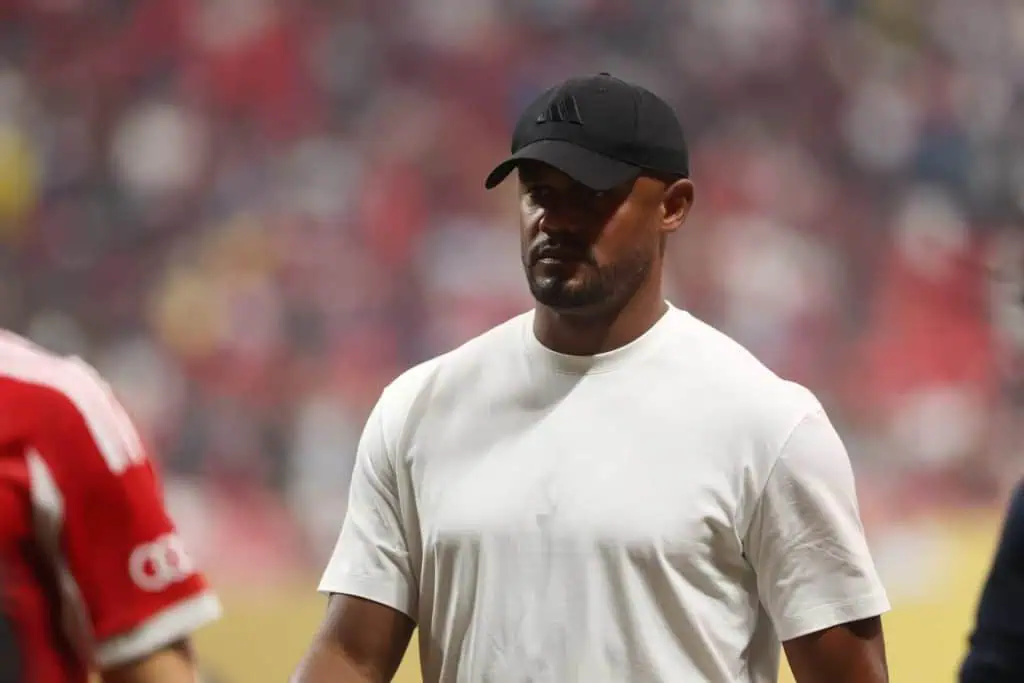
Vincent Kompany captained Guardiola’s greatest City sides, then took the ideas to the touchline. Bayern Munich hired him in 2024 and doubled down by extending his deal through 2029 this autumn.
The result is a juggernaut that has recovered its familiar aura without losing a modern feel. Bayern have started the 2025 26 Bundesliga with perfection, and they are top of the table after nine league games with maximum points and a goal difference that looks like a champion’s. This is not a prediction, it is what the official table shows as we speak.
It is not just math. Reporters described Bayern’s 3 0 statement against Bayer Leverkusen last weekend as another mile marker in a record winning run, achieved even while resting stars to manage the Champions League rhythm. They beat PSG 2-1 last night with 10 men to make it 16/16.
That blend of ruthless control and smart load management feels very familiar to anyone who watched Guardiola build City’s winning machine. Kompany is not just copying routines.
He has simplified Bayern’s high press into repeatable triggers, asked his center backs to be brave at the line, and kept a vertical threat on at least one wing so the possession never becomes sterile.
The big idea is continuity shaped by personality. Kompany absorbed Pep’s insistence on field occupation and circulation speed, then fused it with his defender’s eye for defensive distances.
The outcome is a team that denies counterattacks before they start and still explodes when the opening appears. That is the Guardiola school in a nutshell.
Xabi Alonso And Enzo Maresca Show The Range
Xabi Alonso is the most elegant proof that Pep’s tree is thriving beyond Manchester. Alonso did not coach under Guardiola; he studied under him as a player at Bayern and said he had come to learn.
A decade later, he is the head coach at Real Madrid, appointed on a three-year contract in May, and his team is currently leading La Liga after 11 games. The mix is Alonso’s own, with Madrid leaning into vertical switches and early releases to the front, yet the positional discipline from those Bayern years remains.
The lesson is that Guardiola’s influence is not a clone factory. Alonso’s Madrid look like Madrid should look, with more direct punch and a willingness to race through open doors.
The shared DNA shows up in how they compress space around the ball, how the sixes and eighths keep passing lanes alive, and how the back line holds nerve in build-up. That is coaching lineage, not imitation.
Enzo Maresca is the other branch to watch in England. Chelsea hired him on a five-year deal after his Leicester title, betting on a defined identity. His Chelsea have embraced a patient positional game that at times tests the crowd, yet the principles are coherent.
The high rest defense, the focus on third man runs, and the precise spacing out of possession are all hallmarks of the school. The learning curve is real with a young squad, and yet the league table has them in the European chase pack right now.
Stacked with a Conference League title and the FIFA Club World Cup trophy, his time at London has been a success.
Chelsea’s current spot is not a headline position as of today yet this is where the Guardiola tree is most interesting. The project stage does not contradict the idea that the tree is thriving.
It shows how demanding the method is without the cohesion and seniority that City or Madrid enjoys. When the spacing is right and the midfield rotates on time, Chelsea look like a team that can pin opponents and create waves of advantage.
When it is off by a beat, the structure can feel slow. That is the nature of this model in year one and year two.
The wider picture is impossible to miss. Arsenal are first in England. Bayern are first in Germany. Real Madrid are first in Spain. All three are led by coaches who either worked under Guardiola or explicitly studied him up close.
Final Thoughts
There is no need to force a myth. Guardiola is still competing, still adapting, still arguing with the trends he does not rate. His former assistants and former players are not simply running copies of the Etihad code. They are riffing on it. That is what real coaching trees do. They do not just grow, they branch in directions that prove the trunk is alive.