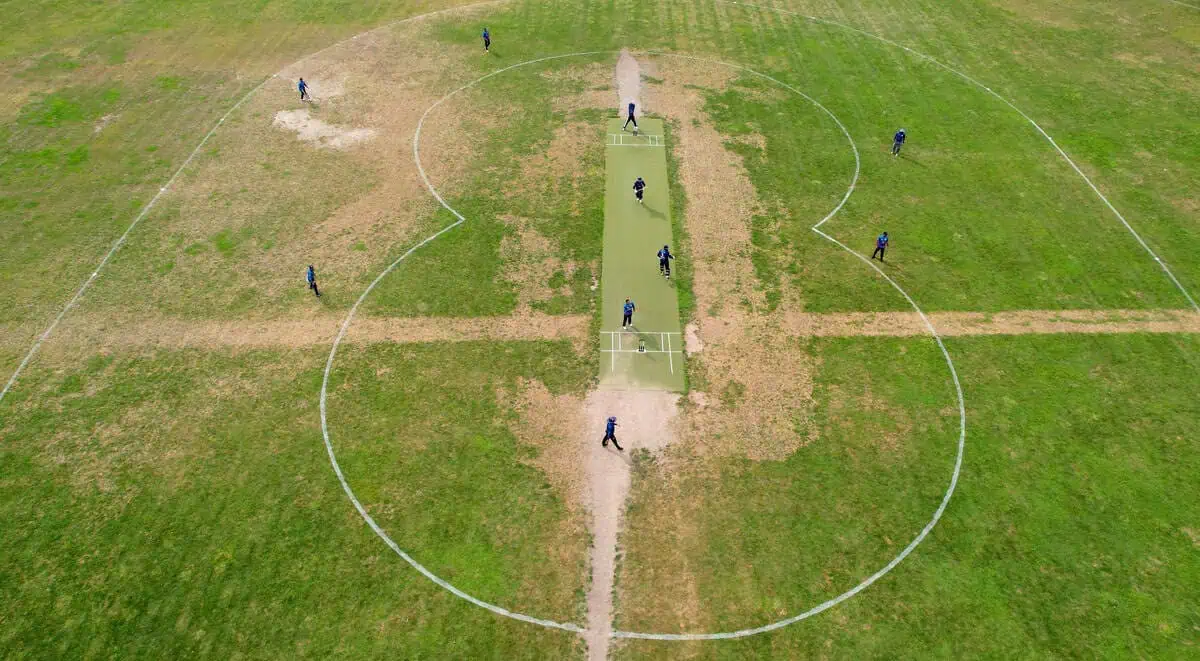
Did Mitchell Starc Really Bowl the Fastest Ball Ever? Let’s Talk About That Speed Gun Glitch

Picture this: you’re settling in for the first ODI between Australia and India. The air in Perth is electric. Australian speed demon Mitchell Starc has the ball, and he’s running in to bowl to Indian captain Rohit Sharma. He lets one fly, the ball zips past the bat, and then a number flashes on the screen that makes everyone watching do a double-take: 176.5kph.
For a wild, glorious moment, the entire cricket world lost its collective mind. Social media exploded. Had we just witnessed history? Did Mitchell Starc, the lanky left-arm menace, just shatter Shoaib Akhtar’s legendary 161.3kph record for the fastest delivery ever bowled? The internet certainly thought so. Fans were in disbelief, forums were on fire, and for a few minutes, Starc was not just a fast bowler; he was a superhero who had defied the laws of physics.
The Cold, Hard Truth About Starc’s “Record” Ball
But then, as it so often does, reality came crashing down. And it came in the form of a very anticlimactic announcement: the speed gun had simply malfunctioned. It was a glitch in the matrix, a technological hiccup. The record wasn’t broken. The ball wasn’t propelled by a rocket engine. It was, in fact, just another fast delivery from Starc, likely somewhere in his usual fiery range of 140-150kph.
So, no, Mitchell Starc did not bowl the fastest ball in cricket history. The “Rawalpindi Express,” Shoaib Akhtar, can sleep soundly tonight knowing his 2003 World Cup record is safe. It was a classic case of getting everyone’s hopes up for nothing. Thanks, technology. You really played us there.
But Starc Still Brought the Heat
Even though the record-breaking moment was a complete fabrication, let’s not pretend Starc wasn’t on an absolute tear. He was bowling with genuine hostility, reminding everyone why he’s one of the most feared pacers in the game. He made life miserable for India’s top order, consistently hitting uncomfortable lengths at high speed.
His efforts paid off handsomely. Starc managed to dismiss the one and only Virat Kohli for a duck—Kohli’s first-ever ODI duck on Australian soil, no less. Talk about making a statement. While Rohit Sharma fell to the relentless pressure built by Starc and his partner Josh Hazlewood, the prized wicket of Kohli was the real feather in Starc’s cap.
The Indian batting lineup, already shaken, crumbled under the Aussie pace assault. Only KL Rahul and Axar Patel showed any real resistance in a rain-shortened match that saw India limp to a meager 136/9.
So, What’s the Takeaway from Starc’s Phantom Record?
It was a rollercoaster of emotions, wasn’t it? One minute, we’re witnessing a history-making, supersonic delivery. The next, we’re being told it was all just a big, fat digital error. It’s a bit like finding what you think is a $100 bill on the ground, only to pick it up and realize it’s a coupon for a restaurant you’ll never go to. The disappointment is real.
But in the end, it was a fun, chaotic moment that got everyone talking. And while the 176.5kph ball will go down in cricket lore as a hilarious “what if,” Mitchell Starc’s actual performance was a stark reminder (pun absolutely intended) that you don’t need a glitchy speed gun to prove you’re one of the best in the business. He may not have broken the speed record, but he certainly helped break the back of India’s batting lineup. And in cricket, that’s what truly counts.