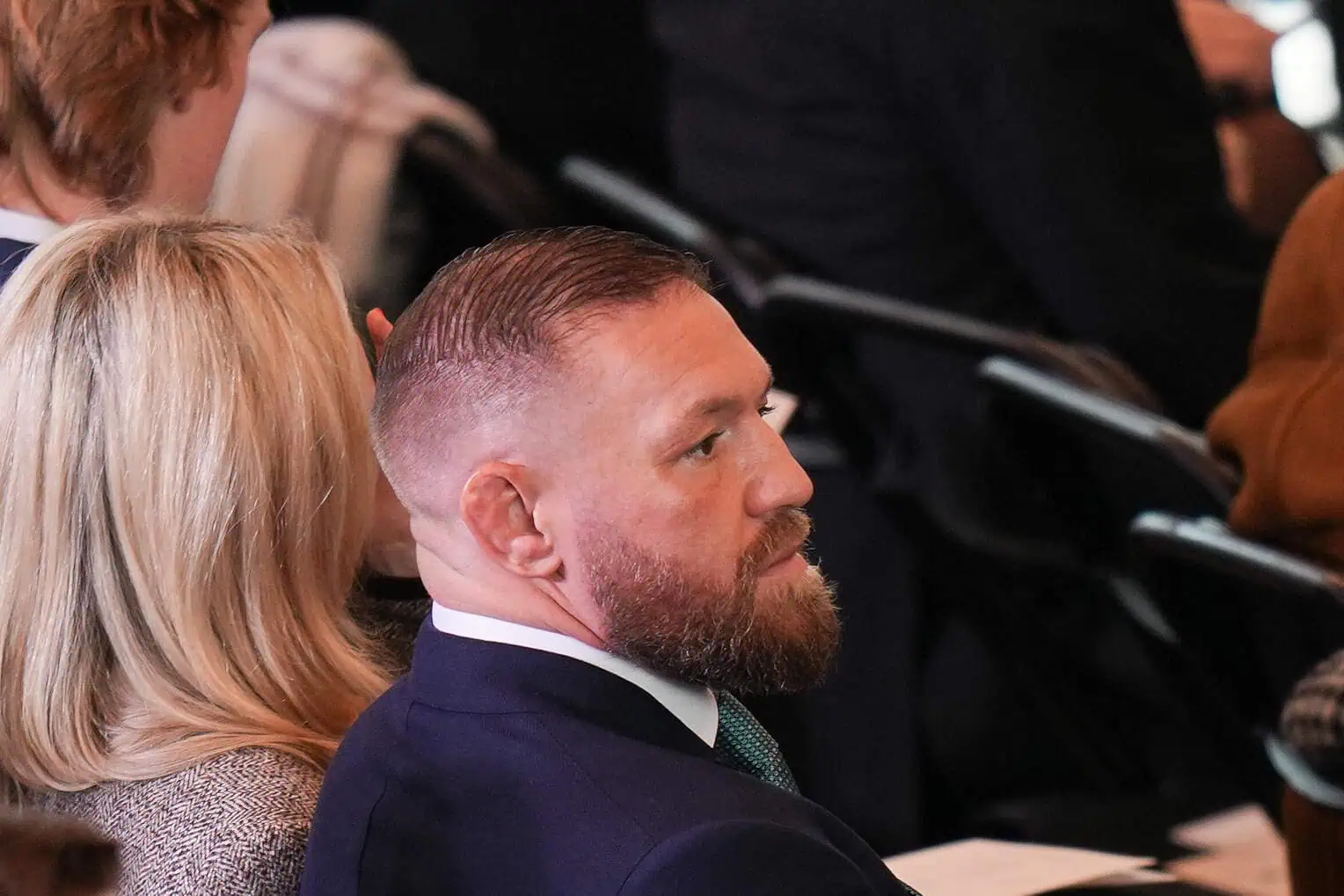
McGregor Banned For 18 Months: Suspension Rocks UFC Comeback Plans

The fight game just dealt another crushing blow to Conor McGregor’s already uncertain future. The UFC announced Tuesday that the former two-division champion has accepted an 18-month suspension for violating the promotion’s anti-doping policy, effectively putting his comeback dreams on ice until March 2026.
This isn’t just another setback for McGregor – it’s a devastating reminder of how far the “Notorious” one has fallen from his throne. The man who once commanded the octagon with the swagger of a king now finds himself benched for missing three drug tests, a rookie mistake that speaks volumes about where his head really is at these days.
The Details Behind McGregor’s Downfall
The Combat Sports Anti-Doping (CSAD) didn’t mince words when they laid out the facts. McGregor failed to show up for biological sample collections on June 13, September 19, and September 20, 2024. Three strikes in the span of just a few months. That’s not an accident – that’s a pattern of negligence that would get any other fighter crucified by the MMA community.
What makes this sting even more is the timing. That first missed test on June 13? That was the exact same day Dana White announced McGregor was pulling out of his highly anticipated UFC 303 fight against Michael Chandler due to a broken toe. You can’t make this stuff up. While fans were already feeling betrayed by another last-minute withdrawal, McGregor was apparently nowhere to be found when drug testers came knocking.
The UFC tried to soften the blow by noting that McGregor was “recovering from an injury and was not preparing for an upcoming fight” during these missed tests. They also praised his cooperation with the investigation, which helped reduce what should have been a 24-month ban down to 18 months. But let’s be honest – cooperation after the fact doesn’t change the fundamental problem here.
McGregor’s Crumbling Empire
This suspension represents more than just administrative failures. It’s a symbol of how disconnected McGregor has become from the sport that made him a global superstar. The Irishman hasn’t stepped into the octagon since July 2021, when Dustin Poirier broke his leg in their trilogy fight at UFC 264. That’s going to be nearly five years by the time he’s eligible to return.
Five years. Let that sink in for a moment. In a sport where careers are measured in dog years, McGregor will have been absent during what should have been his prime earning period. The man who once generated more pay-per-view buys than anyone in UFC history has become a cautionary tale about what happens when you lose focus on the fundamentals.
The fighter who used to obsess over every detail of his preparation, from his movement patterns to his mental warfare tactics, couldn’t even manage to stay available for random drug tests. It’s heartbreaking to watch, honestly. This is the same guy who revolutionized MMA marketing and proved that personality could be just as important as punching power.
The White House Card Dream
McGregor has been vocal about his intentions to fight on the UFC’s planned White House card in June 2026, an event that President Trump announced would be “the greatest fight card ever assembled.” The timing of his suspension ending in March 2026 keeps that possibility alive, but at what cost?
Dana White was quick to pump the brakes on McGregor’s claims about being booked for the White House event, making it clear that nothing is set in stone. That has to be humbling for a fighter who used to dictate terms to the UFC brass. The power dynamic has completely flipped, and McGregor is now the one hoping for opportunities rather than demanding them.
The Bigger Picture for UFC
From the UFC’s perspective, this suspension might actually be a blessing in disguise. The promotion has moved on from the McGregor era in spectacular fashion, with stars like Alex Pereira, Islam Makhachev, and Jon Jones carrying the torch. The sport has proven it doesn’t need McGregor to thrive, which wasn’t always guaranteed during his peak years.
But there’s still something magnetic about the idea of McGregor’s return. Love him or hate him, he remains the most recognizable face in MMA. A successful comeback story could generate massive interest and revenue for the UFC, especially if it happens at a historic White House event.
What This Means for McGregor’s Legacy
The cruel irony is that McGregor’s absence has coincided with some of the most exciting periods in recent UFC history. While he’s been dealing with legal troubles and missing drug tests, the sport has evolved without him. New stars have emerged, divisions have been shaken up, and fans have found new heroes to root for.
This suspension isn’t just about 18 months on the sidelines. It’s about a fighter who once seemed invincible proving that he’s human after all. The same confidence and disregard for rules that made him a superstar has now become his greatest weakness.
The Road Back
If McGregor does return in 2026, he’ll be 37 years old and coming off nearly five years of inactivity. In MMA terms, that’s an eternity. The question isn’t whether he can still fight – it’s whether he still has the hunger that made him great in the first place.
The missed drug tests suggest a fighter who has lost the discipline and focus that separates champions from pretenders. You can’t fake that kind of commitment, and you certainly can’t buy it back once it’s gone.
McGregor’s suspension is officially set to end on March 20, 2026. Whether that represents the beginning of an improbable comeback or the final chapter of a cautionary tale remains to be seen. One thing is certain – the clock is ticking, and the sport isn’t waiting around for anyone, not even Conor McGregor.