Jannik Sinner Fires Back at Alexander Zverev’s Ridiculous Court Speed Claims

Well, well, well. Here we go again with another tennis controversy that’s about as surprising as finding out your favorite pizza place runs out of pepperoni on a Friday night. Alexander Zverev has decided to grace us with his wisdom about how tournament directors are apparently rigging court speeds to favor Jannik Sinner and Carlos Alcaraz. And honestly? Sinner’s response was probably more diplomatic than most of us would have been.
Let’s dive into this latest drama that’s got the tennis world buzzing more than a mosquito at a summer barbecue.
What’s All This Fuss About Court Speeds?
So here’s the deal: Zverev threw out this wild claim that tournaments are deliberately slowing down courts to help Sinner and Alcaraz reach more finals. Because apparently, when you’re struggling to keep up with the next generation, the logical explanation is that everyone’s conspiring against you. Classic.
The German player suggested that court homogenization – basically making all courts play more similarly – is somehow a grand scheme to benefit these two rising stars. It’s like blaming the weather for your bad hair day, except with more million-dollar prize pools involved.
But here’s where it gets interesting. Roger Federer, the king of diplomatic responses, actually backed up Zverev’s claims to some degree. Even the Swiss maestro suggested tournament directors might be tweaking conditions to ensure Sinner and Alcaraz make it to the business end of tournaments. When Federer’s raising eyebrows, you know there’s something worth talking about.
Sinner’s Response Was Pure Class
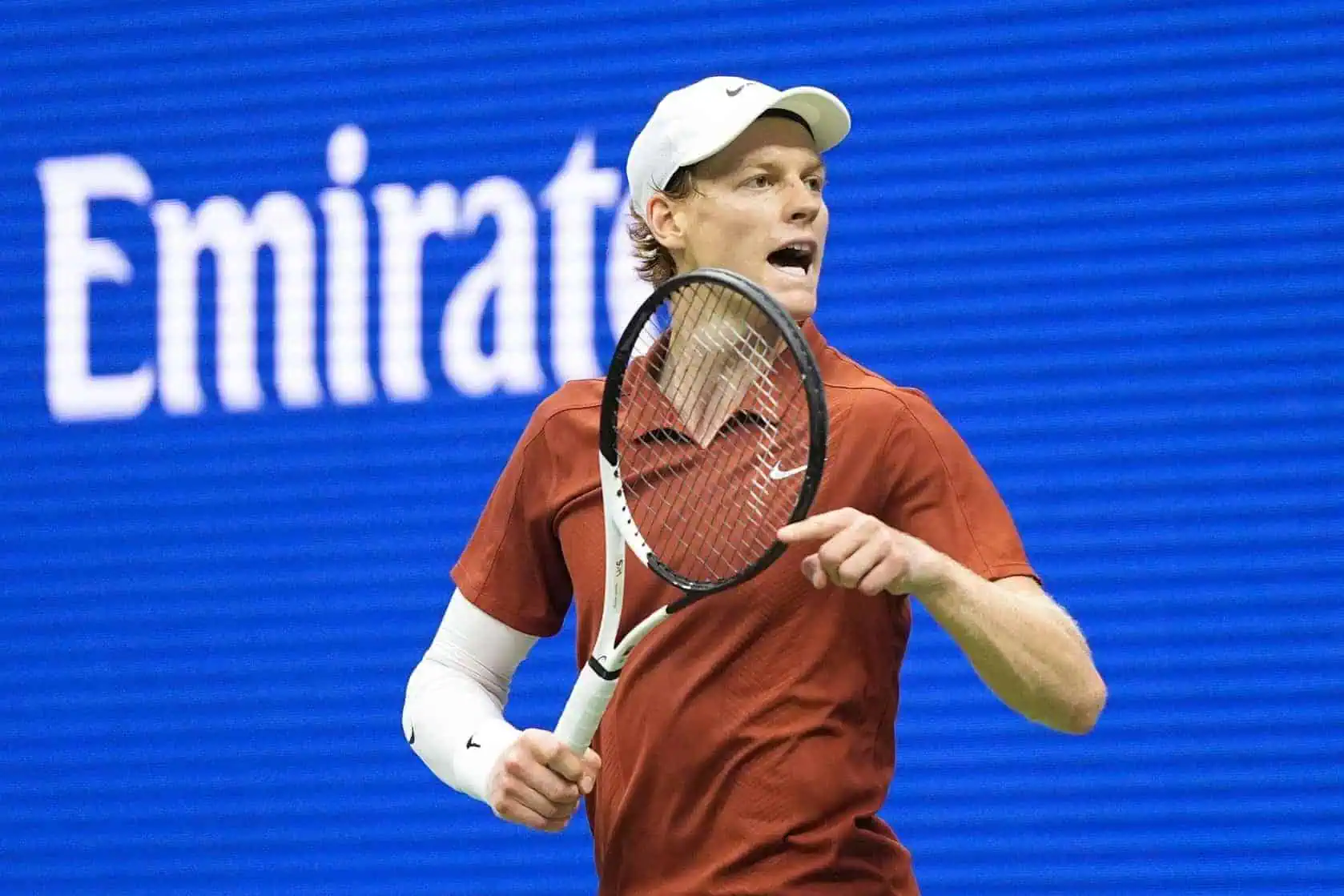
After defeating Daniel Altmaier in straight sets (6-3, 6-4) at the Shanghai Masters in one hour and 38 minutes – because apparently crushing opponents is just another Tuesday for this guy – Sinner was asked about Zverev’s spicy comments.
His response? Refreshingly straightforward and probably delivered with that trademark Italian shrug we’ve all come to love: “Me and Carlos, we don’t make the courts. We try to adapt to every situation.”
Boom. Mic drop. End of discussion.
It’s the kind of response that makes you wonder if Sinner has a secret handbook titled “How to Shut Down Drama Without Actually Trying.” The 23-year-old Italian basically said, “Look, we show up, we play tennis, we win matches. What else do you want from us?”
The Real Tea About Court Conditions

Here’s where things get actually interesting instead of just petty. Data from 2024 shows that most major hard-court tournaments have a Court Pace Index (CPI) above 35, which technically means faster conditions. So if courts are supposedly being slowed down for Sinner and Alcaraz, someone forgot to tell the actual courts.
But wait, there’s more! Plot twist: faster conditions actually tend to suit Sinner more than Alcaraz anyway. So even if we’re buying into this conspiracy theory, it doesn’t really make sense when you look at the numbers. It’s like accusing someone of cheating at a game they’re already naturally good at.
Why This Controversy Misses the Point Entirely
Let’s be real here for a hot minute. Both Sinner and Alcaraz have reached finals on all three surfaces this year and won grass-court titles. That’s not court manipulation – that’s called being ridiculously talented at hitting a fuzzy yellow ball with a racquet.
The best players in tennis history have always had one thing in common: they adapt. Federer dominated on grass and hard courts. Nadal owned clay like he had the deed to every court in Paris. Djokovic somehow figured out how to win everywhere, including matches that seemed mathematically impossible.
Now we have Sinner and Alcaraz doing the same thing, and suddenly it’s because of court conditions? Please. These two are putting in work that would make most people question their life choices, and they’re being rewarded with victories. Revolutionary concept, right?
The Bottom Line on Sinner vs. Zverev Drama
Court homogenization isn’t some new conspiracy cooked up to help young players. It’s been happening for years, and guess what? It probably helped Zverev and other players in the past too. The difference is that Sinner and Alcaraz are just better at adapting to whatever’s thrown at them.
Sinner’s measured response to this whole situation shows exactly why he’s where he is in the rankings. Instead of getting dragged into pointless drama, he’s focused on what actually matters: showing up and winning tennis matches.
At the end of the day, you can blame court speeds, tournament directors, or even the phase of the moon if you want. But when push comes to shove, the scoreboard doesn’t lie, and right now, it’s saying that Sinner and Alcaraz are simply operating on a different level than everyone else.