Donald Trump Thinks 2026 World Cup Games Could be Dangerous in Certain Cities

The beautiful game, the world’s game, is set to return to North American soil in 2026. The World Cup, a spectacle that unites nations and brings cities to a standstill, is more than just a tournament; it’s a month-long festival of humanity. But a shadow of uncertainty has been cast over the upcoming celebration, not from a contested referee decision or a shocking upset, but from the Oval Office itself.
President Donald Trump, in a move that sent ripples through the soccer world, has suggested that politics could dictate the beautiful game’s grandest stage. Speaking to reporters, he issued a stark warning to host cities that have pushed back against his administration’s policies: play by my rules, or you might lose the party.
The World Cup Under a Political Cloud
The heart of the issue beats in cities like Seattle and San Diego, vibrant, diverse communities slated to host six games each. These cities, led by what Trump described as “radical left lunatics,” have been vocal in their opposition to his stances on immigration and other key issues. The president’s message was blunt and carried an unmistakable edge.
“If I think it’s not safe, we’re going to move it out of that city,” Trump stated, leaving no room for ambiguity. The comment hung in the air, a direct challenge to the very fabric of the joint bid that brought the World Cup to the United States, Mexico, and Canada. The implication was clear: a city’s political alignment could cost it the economic boom and cultural prestige that comes with hosting the tournament.
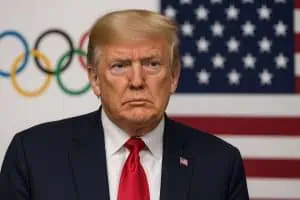
The promise of security, initially a guarantee, morphed into a conditional statement. “It will be safe for the World Cup,” he assured, but then added the pivotal clause, “If I think it isn’t safe, we’ll move it to a different city. Absolutely.” It’s a level of political intervention in sporting logistics that feels unprecedented and deeply unsettling for fans who believe the game should transcend politics.
The Unclear Path to Shifting Pitches in the World Cup
The logistics of such a move are a labyrinth. The 2026 World Cup, an expanded 48-team behemoth, is a finely tuned machine of travel, broadcasting rights, and ticketing that has been years in the making. Eleven U.S. cities are part of this intricate dance. Uprooting matches from one and planting them in another is not a simple switch. It’s a logistical earthquake.
How would such a decision be made? When would it be made? The questions hang heavy, with the FIFA World Cup draw on December 5th in Washington, D.C., looming as a potential moment for clarity, or perhaps, further confusion. As of now, both FIFA and the governments of our co-hosts, Canada and Mexico, have remained silent, leaving fans and officials to read the political tea leaves. The very soul of the tournament, its ability to bring people together regardless of borders or beliefs, feels threatened.
A Canadian Lifeline?
Amidst the turmoil brewing south of the border, a hand of readiness has been extended from the north. Vancouver, already scheduled to host seven matches, has stepped forward. The Premier of British Columbia didn’t just express willingness; he confirmed they’ve proactively reached out to FIFA.
“Additional games in British Columbia would not only be possible, but they would be incredibly welcome,” he told reporters, offering a port in the potential storm. “We’ve actually written to FIFA to say if, for whatever reason, they need to move games from any other locations, British Columbia stands ready to host.”
This Canadian gambit adds another layer of intrigue. It’s a savvy political and economic move, positioning Vancouver as a reliable, stable partner in a suddenly volatile environment. For fans, it might be a relief to know there’s a contingency plan, but it’s a solution to a problem that many feel should never have existed in the first place. The World Cup is meant to be a celebration, not a political bargaining chip. For now, the global soccer community holds its breath, hoping the focus returns to the pitch and the magic of the game itself.