MLB Confirms Game-Changing ABS Challenge System for 2026, Promising Faster Calls and Unmatched Strike Zone Accuracy

Major League Baseball will implement the automated Ball Strike System (ABS Challenge System) in 2026, it was announced on Tuesday.
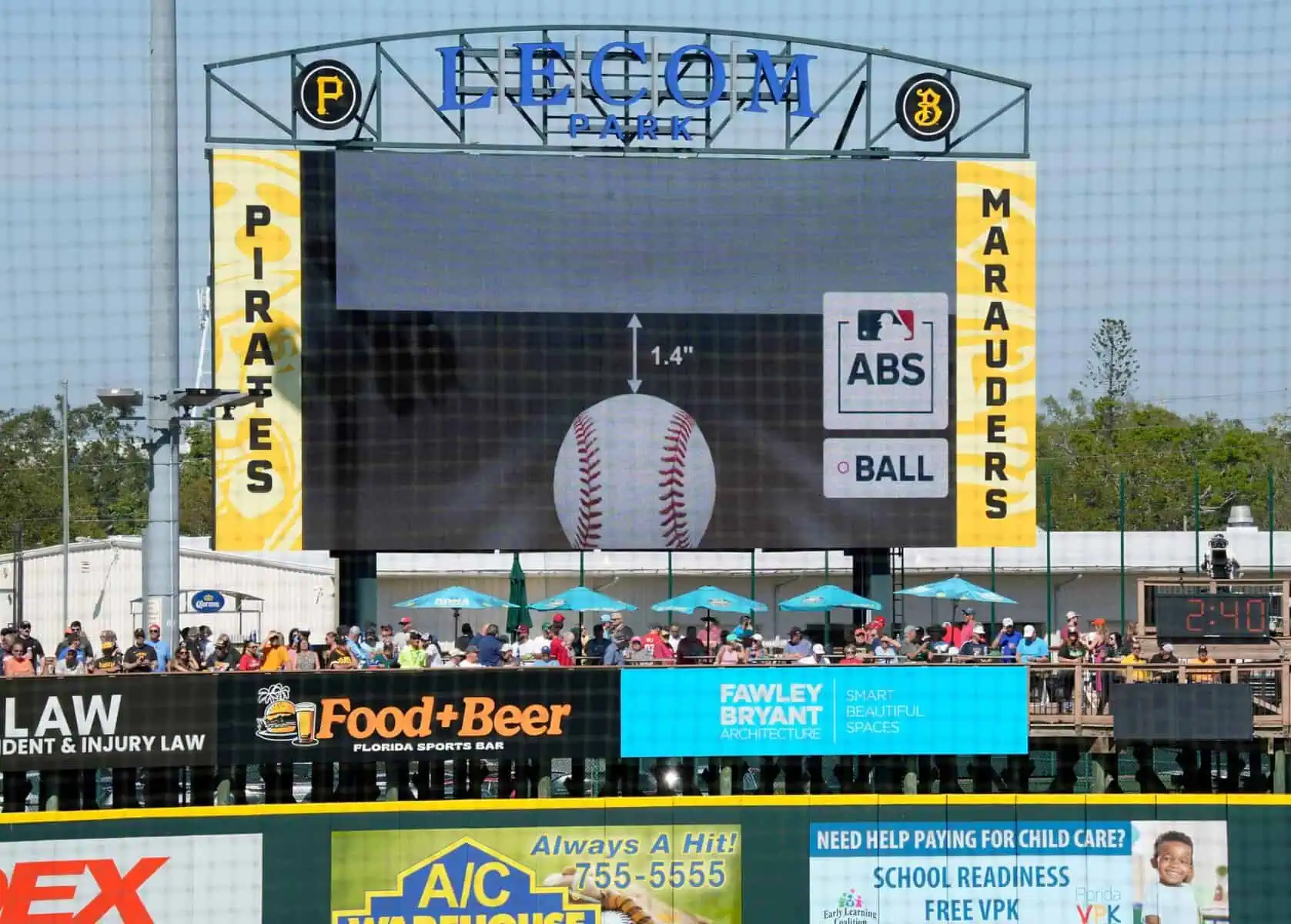
The Automated Ball Strike System (ABS) was used in Spring Training this year as a test. If you are not familiar with the system, it provides a cartoon-like view of the strike zone, and where the pitched ball was in relation to the strike zone. Many TV telecasts have a version of this view. This season, it was just for fun. Next season, it gets real.
How The Automated Ball Strike System (ABS) Works
The system that will be used by MLB runs on a 5G private network from T-Mobile for Business’ Advanced Network Solutions, according to a press release from the league. There will be twelve cameras in each stadium that will track the location of the pitch.
When there is a ball or strike dispute, the pitcher, catcher, or batter can challenge.
When there is a challenge, the umpire will then call a time-out, go under the hood, and review the pitch frame by frame and the TV broadcast will go to commercial… ok, just kidding … here is what will really happen:
- When there is a dispute, the player will tap their hat or helmet.
- The pitch is compared to the strike zone by the computer system
- The umpire will announce the decision based on the system, and the view will be on both the game scoreboard and the telecast
- Each team will have two challenges
- If the team wins the challenge, they keep the challenge; if they lose, they are down to one challenge
- MLB predicts this process will take 15 second or less
What To Expect in 2026
The request for a challenge has to be immediate. The pitcher, catcher or batter cannot “receive help from other players, the coaching staff, or anyone else.” Hitting a garbage can in the tunnel of the dugout is deemed illegal. (Kind of kidding).
From the press release, MLB Commissioner Rob Manfred, said: “I commend the Joint Competition Committee for striking the right balance of preserving the integral role of the umpire in the game with the ability to correct a missed call in a high-leverage situation, all while preserving the pace and rhythm of the game. I thank the Major League Umpires for their collaboration and the Major League Players for their feedback in moving the game forward for the fans.”
Besides spring training this year, the system has been tested for several seasons. In 2021, the Florida Single A Minor League did the first pilot. Triple A has used it since 2023.
For this reason, you may have noticed rookies during their first few at bats in the big leagues taping their helmet when they saw a questionable strike. In 2025, this was met with inquisitive looks and did not mean anything in MLB.
In 2026, it will mean a challenge.