NFL Finally Admits What Eagles Fans Already Knew About the Elite Tush Push

The Philadelphia Eagles have been running their signature Tush Push play like a Swiss watch for years now, churning out first downs and touchdowns with the precision of a well-oiled machine. But apparently, the zebras have been asleep at the wheel, missing some pretty obvious infractions that even my grandmother could spot from the nosebleeds. This week, the NFL quietly sent out its weekly officiating video to refs, essentially telling them to wake up and do their jobs when it comes to policing the most controversial play in football.
The NFL’s Not-So-Subtle Admission of Guilt
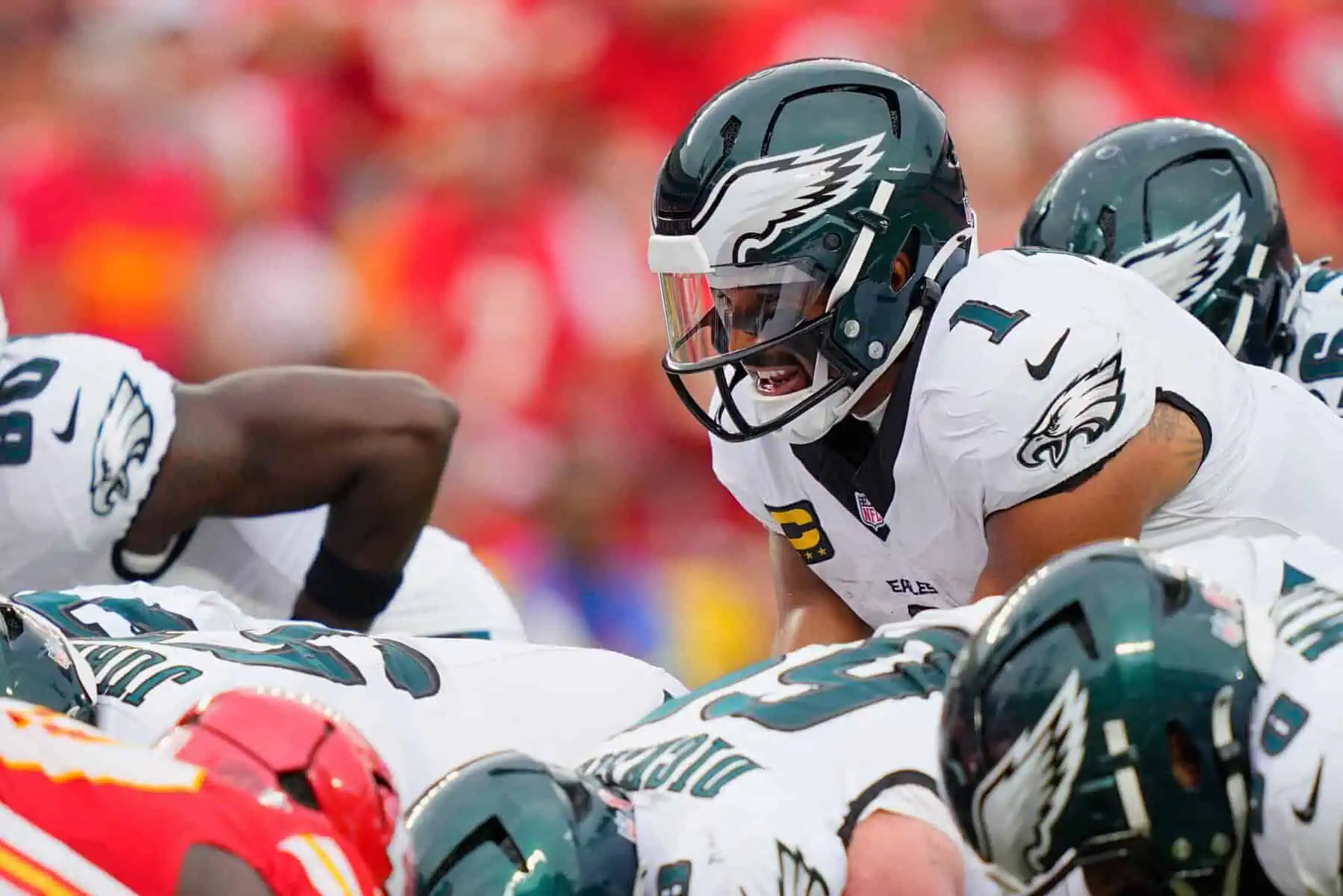
In what can only be described as the league’s version of “our bad,” the NFL instructed officials this week to keep a tighter watch on quarterback sneaks, particularly the Eagles’ beloved Tush Push. The timing isn’t coincidental – it comes right after Philadelphia used the play six times against Kansas City in their Week 2 victory, with at least two instances where offensive linemen were clearly moving before the snap like eager kindergarteners in a lunch line.
The league’s training video specifically highlighted both offensive offside violations and false starts on the play, according to multiple sources. Translation: “Hey refs, maybe try watching the game with both eyes open next time.” It’s almost comical that it took this long for the NFL to acknowledge what everyone with functioning retinas could see: Eagles linemen have been getting away with early movement more often than a teenager breaking curfew.
Why the Tush Push Has Officials Seeing Stars

Here’s the thing about officiating the Tush Push: it’s like trying to count raindrops in a thunderstorm. When you have 300-pound men packed together tighter than sardines in a can, spotting false starts becomes an exercise in futility without the benefit of super slow-motion replay. The NFL even acknowledges this difficulty, essentially giving refs a participation trophy for trying their best in impossible circumstances.
Former Eagles center Jason Kelce, who helped perfect this controversial play, saw this crackdown coming from a mile away. On his podcast this week, he warned his former teammates that they’d be “under a microscope moving forward” because everyone would be analyzing their every movement like they’re dissecting the Zapruder film. “They need to be very, very cautious because the calls are going to be starting to come,” Kelce predicted with the wisdom of someone who knows where all the bodies are buried.
The Double Standard That’s Hard to Ignore
What’s particularly rich about this whole situation is that Philadelphia isn’t the only team running quarterback sneaks, yet they’re the ones catching all the heat. CBS Sports research shows that at least eight teams have attempted similar plays through two weeks this season, but somehow, the Eagles are the poster child for everything wrong with football. It’s like blaming McDonald’s for childhood obesity while ignoring every other fast-food chain in America.
The Saints already got flagged for the same violation in Week 1 when left guard Dillon Radunz lined up in the neutral zone, proving that refs can spot these infractions when they actually bother to look. But when Philadelphia does it? Suddenly, officials develop the vision of a legally blind bat wearing sunglasses at midnight.
The Politics Behind the Penalty
The Tush Push has become the NFL’s most polarizing play, not because it’s dangerous (zero percent injury rate, thank you very much), but because it’s ugly and effective. The Green Bay Packers tried to get it banned during the offseason, falling just two votes short of the necessary two-thirds majority. Their argument? It doesn’t look pretty enough for prime-time television.
Let’s be honest, football purists hate the Tush Push for the same reason they hate 2-point conversions and defensive holding calls that extend drives. It disrupts their idealized version of how the game should be played, where quarterbacks drop back 40 times a game and running backs dance through holes that don’t exist. The Eagles have found a way to guarantee short-yardage conversions, and the football establishment can’t stand that someone figured out a cheat code to their precious game.
What This Means Moving Forward
As the Eagles prepare to host the Rams this Sunday in a battle of undefeated teams, expect every single Tush Push attempt to be scrutinized like a Supreme Court nomination. Officials will be looking for any excuse to throw a flag, partly to save face after their earlier oversights and partly to appease the vocal minority who want to see this play eliminated from the sport entirely.
The irony is delicious. The NFL spent years allowing the Eagles to perfect a play that might not have been entirely legal, and now they’re scrambling to clean up their own mess. It’s like letting your teenager throw house parties for months and then suddenly deciding to enforce curfew when the neighbors start complaining about the noise.
The Bottom Line on the Tush Push
Whether you love it or hate it, the Tush Push isn’t going anywhere. The Eagles invested too much time perfecting it, and they’re not about to abandon their secret weapon because some refs finally learned how to use their whistles. But don’t expect them to get away with the borderline illegal stuff anymore; the microscope is officially turned on, and everyone’s watching.
The real question isn’t whether the Eagles will continue using the Tush Push, but whether they can execute it cleanly enough to avoid the flags that are surely coming their way. Because if there’s one thing we’ve learned from this whole saga, it’s that the NFL loves nothing more than a good controversy, especially when it involves the team that everyone loves to hate.