Remembering Davey Johnson: The Brilliant Baseball Mind Who Brought Championship Glory To New York

Baseball lost one of its most cerebral and confident leaders Friday night when Davey Johnson passed away at 82, leaving behind a legacy that perfectly captured the swagger of 1980s New York baseball. Johnson wasn’t just another manager—he was the perfect storm of analytical thinking and old-school bravado who transformed the Mets into champions when it mattered most.
The Manager Who Predicted Greatness
Picture this: It’s spring training 1986, and while most managers are playing it safe with cautious optimism, Johnson boldly tells his team and anyone within earshot, “We’re not just going to win, we’re going to dominate.”
Talk about putting your reputation on the line! But here’s the thing about Johnson—he wasn’t just blowing smoke. The man had done his homework, literally programming computers to analyze lineups back when most people thought a hard drive was something you did on the highway.
His Mets backed up every word, steamrolling to 108 wins and that unforgettable World Series victory over Boston. After Game 7, a gleeful Johnson crowed, “Like I told you guys all along, there was never a doubt.”
The Numbers Tell the Story
Johnson’s managerial brilliance wasn’t just about one magical season. Consider these jaw-dropping statistics:
- 595 wins with the Mets—still the franchise record
- First manager in MLB history to win 90+ games in each of his first five seasons
- 1,372 career wins (33rd all-time)
- Won Manager of the Year in both leagues (1997 AL, 2012 NL)
But Johnson’s impact went far beyond the win column. He was genuinely ahead of his time, using computer analysis when Earl Weaver was tossing his statistical reports straight into the trash can.
The Player Who Became a Legend
Before he was calling the shots from the dugout, Johnson was making history between the lines. His 1973 season with Atlanta remains one of baseball’s most remarkable individual campaigns—43 home runs from a second baseman, a record that stood for nearly five decades until Marcus Semien finally topped it in 2021. Those Baltimore Orioles teams of the late ’60s and early ’70s were loaded with talent, and Johnson was right in the middle of it all, earning three Gold Gloves while helping capture World Series titles in 1966 and 1970.
The Perfect Manager For a Perfect Team
What made Johnson special wasn’t just his baseball IQ—it was his ability to manage personalities. The 1986 Mets were famously boisterous, filled with larger-than-life characters who needed a manager secure enough to let them “do their thing,” as Johnson put it.
“I just let everybody do their thing,” Johnson wrote in his 2018 autobiography, perfectly summarizing his hands-off approach that somehow never compromised his authority. Darryl Strawberry, one of Johnson’s biggest stars, captured it perfectly in his Instagram tribute: “His ability to empower players to express themselves while maintaining a strong commitment to excellence was truly inspiring.”
Beyond the Mets Magic
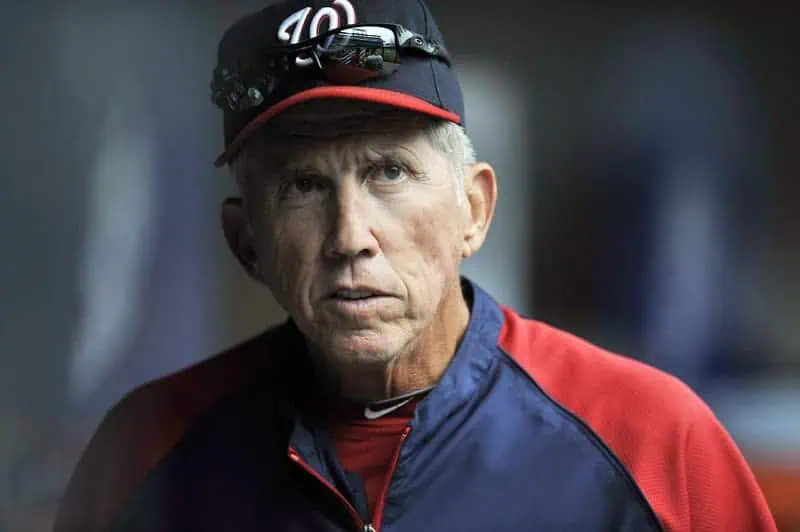
Johnson’s managerial journey didn’t end when Frank Cashen fired him during the 1990 season. Like any great competitor, he bounced back, leading successful runs with the Orioles, Reds, and Nationals while proving his 1986 success wasn’t a fluke. His 1997 Orioles won 98 games, and his 2012 Nationals captured 98 victories—the most in franchise history. Not bad for a guy who supposedly peaked in the ’80s.
The Lasting Legacy
Johnson’s death marks the end of an era, but his influence on baseball management continues. He pioneered the use of analytics decades before “Moneyball” became a household term, showing that gut instincts and hard data could work hand in hand.
More importantly, Johnson proved that confidence, even borderline arrogance, could be a manager’s greatest asset when backed by preparation and genuine baseball knowledge. He wasn’t afraid to make bold predictions because he’d done the work to make them a reality.
Baseball will miss his brilliant mind, infectious confidence, and unwavering belief that sometimes the best way to lead is to get out of your players’ way and let their talents shine.