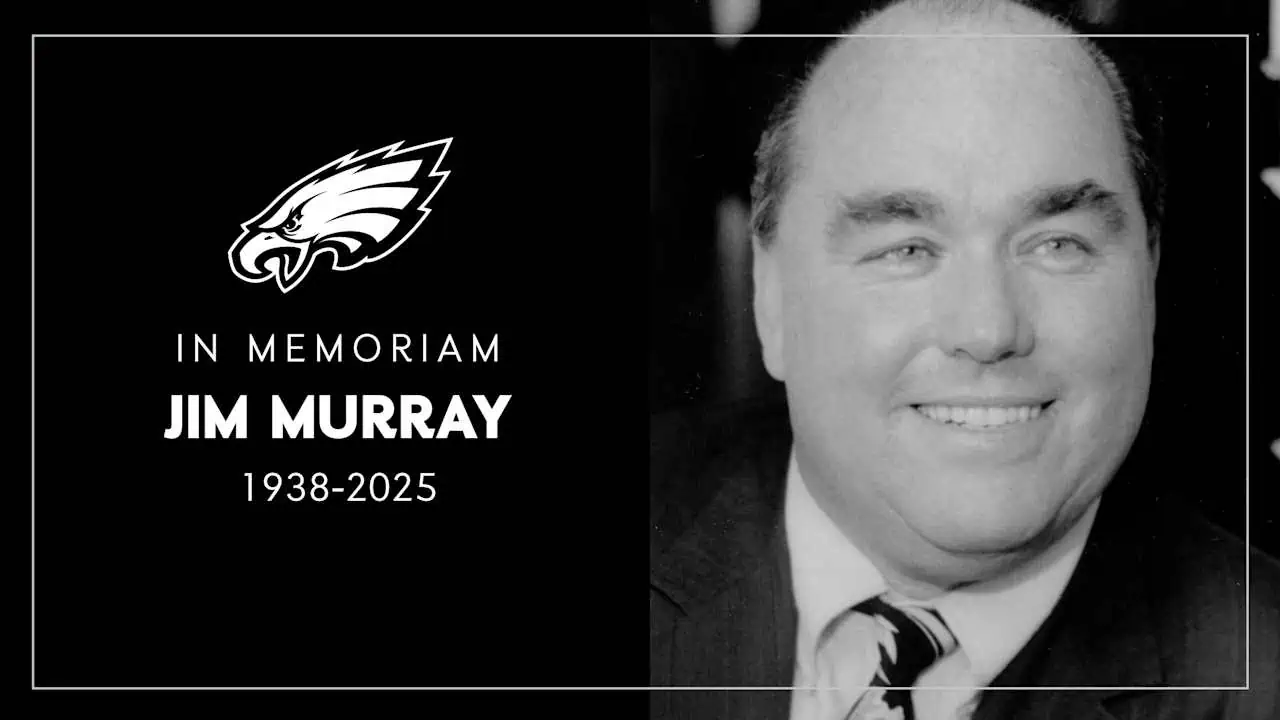
Former Philadelphia Eagles GM Jim Murray Passes Away At 87

When you talk about the Philadelphia Eagles and their journey to football greatness, you can’t tell that story without mentioning Jim Murray. The man who passed away at 87 wasn’t just another suit in the front office – he was the architect behind the Birds’ first Super Bowl appearance, and frankly, one hell of a human being.
From West Philly Row Homes to NFL Greatness
Picture this: a kid from West Philadelphia, raised in a row home, dreaming big dreams. That was Jim Murray, and boy, did those dreams come true. After graduating from West Catholic and Villanova, this guy didn’t just climb the ladder – he built his own elevator to the top.
Murray joined the Philadelphia Eagles in 1969 as a PR guy, but anyone who knew football could see he had the vision of a general manager. When owner Leonard Tose promoted him to GM in 1972, the critics came out swinging harder than a Mike Tyson uppercut. “My appointment not only was second-guessed, it was laughed at,” Murray once said. “Nobody likes to be ridiculed.”
Well, guess who got the last laugh?
Building a Super Bowl Team From Scratch
Here’s where the story gets juicy. The Philadelphia Eagles had been about as successful as a screen door on a submarine from 1962 to 1971 – just one winning season in a decade that felt longer than a Monday morning meeting. But Murray? This guy saw something others didn’t.
In 1976, he made the move that changed everything: hiring Dick Vermeil as head coach. Together, they transformed the Eagles from laughingstock to Super Bowl contenders. Under Murray’s leadership, the team reached the playoffs four times, including that magical 1980 season when they flew all the way to Super Bowl XV.
Sure, they lost to the Oakland Raiders, but getting there? That was pure Murray magic. The Philadelphia Eagles finally had their moment on football’s biggest stage, and it was this West Philly kid who made it happen.
More Than Football: The Heart of a Champion
But here’s what really gets me choked up about Jim Murray’s story – the guy had a heart bigger than Lincoln Financial Field. While building championship teams, he was also building hope for families going through their darkest hours.
Murray co-founded the first Ronald McDonald House in Philadelphia back in 1974. Think about that for a second. Here’s a guy managing million-dollar athletes and complex draft strategies, yet he found time to create a place where families could stay close to their sick children receiving treatment at local hospitals.
He also helped launch the Eagles Fly for Leukemia initiative. When someone asks you what it means to use your platform for good, you point them to Jim Murray’s playbook.
A Legacy That Transcends Football
Eagles owner Jeffrey Lurie nailed it when he said Murray was “a passionate leader and team visionary.” But let’s be real – that description barely scratches the surface. This was a guy who proved that success isn’t just about what you accomplish, but how you lift others along the way.
The Philadelphia Eagles organization, the Ronald McDonald House Charities, and countless families who found comfort during their most difficult times – they all carry pieces of Jim Murray’s legacy forward.
The Final Whistle
When the news broke that Murray had died, surrounded by family and friends, it hit the Philadelphia sports community like a freight train. Rob Ellis, Murray’s godson and a veteran sports media personality, summed it up perfectly: “To know Uncle Jim was to love him.”
That’s the thing about legends – they don’t just build teams or create programs. They build relationships, create memories, and leave behind a blueprint for how to do things the right way.
Jim Murray started as a PR guy with big dreams and became the general manager who gave the Philadelphia Eagles their first taste of Super Bowl glory. More importantly, he became a man who showed us that true success is measured not just in wins and losses, but in lives touched and communities served.
Rest in peace, Jim Murray. The city of Philadelphia, the Eagles family, and countless others whose lives you touched will never forget what you built.