How Bruno Fernandes Stayed at Manchester United After Rejecting a Lucrative Al-Hilal Offer

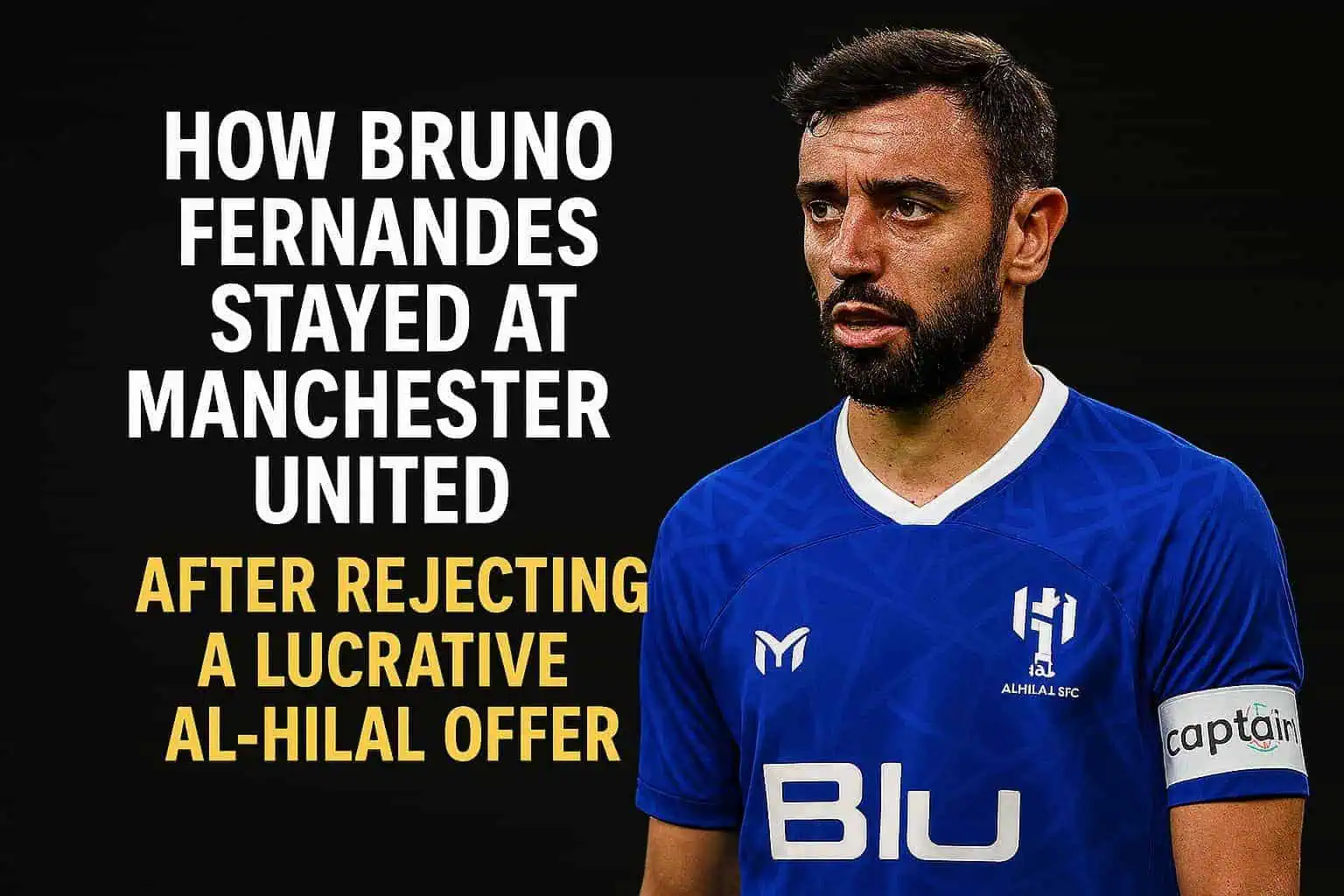
Rúben Amorim has set a simple standard for the new Manchester United era. He only wants players who genuinely want to be at the club. The manager used his captain as the living example, telling staff that Bruno Fernandes rejected a fortune from Al Hilal in May and deserved respect and love for staying.
That message matters because it draws a line between a short-term payday and a long-term identity. Multiple outlets reported that Fernandes had a massive proposal from Saudi Arabia on the table, but still chose Manchester United so he could continue competing at the top level in Europe and lead the rebuild under Amorim.
Fernandes later confirmed that he had a serious offer from the Saudi Pro League and turned it down because he still sees his best football happening in European competition. He framed the choice as a sporting one rather than a financial one and linked it to belief in Amorim’s project. That clarity from the captain has given the dressing room a north star before the new season.
The Saudi Offer in Context and Why the Answer was No
Interest from the Saudi Pro League in elite European players is no longer a novelty. The money is enormous and the pitch is as clear as it is tempting. Reports around the Fernandes approach described an eye-watering package from Al Hilal, a club that has already drawn several stars and shown a willingness to pay premium wages to pull leaders from Europe’s biggest sides.
Fernandes listened and then chose the opposite path by committing to Old Trafford. His decision fits a wider pattern this summer where top players and managers publicly weighed Saudi overtures against the desire to test themselves in the Champions League and top European leagues.
Amorim has been open about the standards he wants. Only players who truly want to be there will be part of his plans. The message landed internally during a staff meeting in which he praised Bruno Fernandes for turning down the financial draw and emphasised that paying players whatever they want is not how a serious club runs its business. Culture set from the top can sound like a buzzword until the most influential player embodies it. At Manchester United, the captain has already done so.
What Amorim’s stance means for the rebuild

Manchester United’s summer has been about more than tactics and fitness. It has been about defining who belongs in the project. Amorim’s conversations throughout the preseason have returned to the theme of earning a place and fighting for it. He challenged his players during the final friendly week by saying they needed to fight in training to show they deserve to start the opener. That tone places accountability at the heart of selection and aligns with the demand for commitment he outlined when discussing Fernandes.
There is also a recruiting dimension. Manchester United pursued profiles that fit a high-intensity, aggressive, and positionally disciplined game model while avoiding moves that might unbalance the wage structure. A manager’s ideals are only as strong as the people who enact them. When the captain demonstrates that money alone will not dictate his choices it makes it easier to hold others to the same bar.
It also reassures supporters who have watched a decade of quick fixes that this rebuild values character as much as output. Preseason has been realistic in its targets. Amorim and his players have talked about climbing back into Europe and closing a points gap that was far too large last year.
That honesty matters. Cultural resets can sound like slogans until they are paired with pragmatic benchmarks. Manchester United still need more control in midfield, cleaner pressing connections between the front and the double pivot, and greater efficiency in transition moments. None of those issues are solved by one big sale or one superstar salary. They are solved by a group that trains to a standard and holds itself there from August to May.
Fernandes Staying Moves the Needle on and off the Pitch
Bruno Fernandes is the team’s reference in possession and out of possession. He leads United in chance creation season after season and is a high-volume presser who sets the trigger for the forward line.
Retaining that engine changes the ceiling of the side in a way that no quick fee could replace. Amorim’s attacking structure leans on an advanced eight who can arrive in the box, combine in half spaces, and hit switches early to the weak side. Fernandes is already expert at all three. Keeping the captain allows the manager to implement principles faster and to use minutes to blood others around a stable core rather than rebuild the core itself.
Leadership matters in a different way too. The dressing room watches how the most senior voices behave. Choosing Manchester United at a moment when the outside world assumed a money-first exit sends a signal to younger players that prestige still lives in earning the shirt. The reaction among fans has reflected that.
There is appreciation for a player who speaks plainly about wanting to win the biggest matches at the highest level and who chooses that path when a lucrative alternative is available.
Recruitment choices around him strengthen the argument that United are prioritising fit over fireworks. Reports during the window described Benjamin Sesko picking United amid competing proposals, with suggestions that other suitors offered more attractive financial terms.
The striker’s arrival gives Amorim a direct outlet and a pressing reference while also supporting Fernandes with vertical runs that open the lane for the through ball and the late edge of box strike. The arrival of Bryan Mbeumo and Matheus Cunha also adds a huge gulf in quality from what it was for the past few years, and Fernandes could have his best spell at the club with such quality around.
The test now lives in the grind of the season. Amorim wants the group to own the standards, not just nod along in meetings. United have spoken about the need to fight for selection, the demand to stay switched on without the ball, and the importance of decision-making in the final third.
A captain who signed up for all of that when an easier life beckoned elsewhere is the best enforcement mechanism a manager can have. The next steps are concrete ones. United need to turn more possession into high-value chances, keep the distances tight between units when defending counterattacks, and maintain availability across the squad after years of soft tissue injuries. Those are technical tasks that require collective buy-in as much as coaching detail.
A player of Bruno Fernandes’s calibre chose competition over comfort and made that choice publicly. Amorim amplified it internally to set the tone for a club that has too often blurred its identity. The manager’s standard is clear. If you want the badge, show it in your actions. If you want the salary without the sacrifice, look elsewhere. Manchester United supporters have heard many promises in the past decade. This one is different because it began with a decision rather than a slogan.