Barcelona Left Stung by Benjamin Sesko’s Manchester United Switch as Deco’s Long Term Plan Takes a Hit

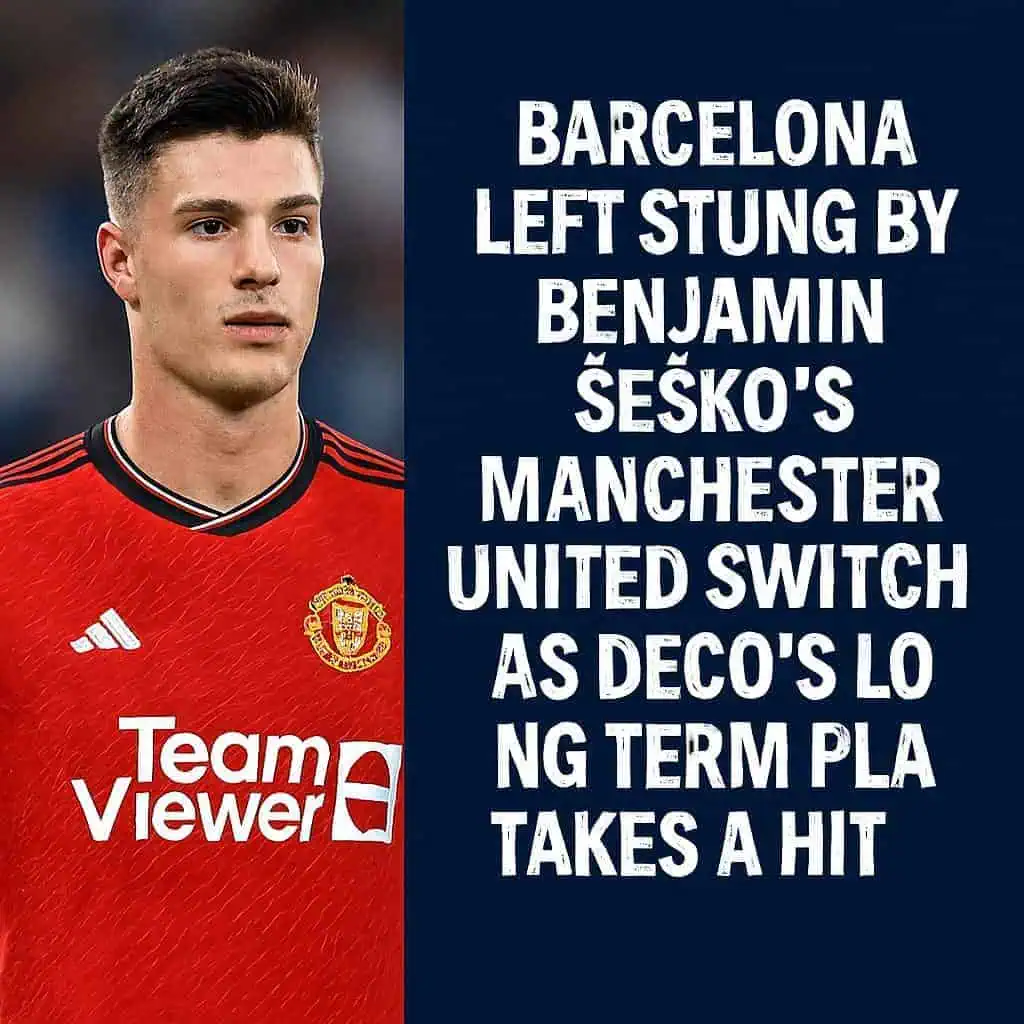
Barcelona did not simply admire Benjamin Sesko from afar. Executives in the sporting department, led by Deco, had ring-fenced the Slovenian as their preferred heir to Robert Lewandowski, with a view to a marquee move in 2026 when the Polish striker’s cycle at the club naturally winds down. That plan has been dealt a painful blow after Manchester United sealed Sesko on a long contract and unveiled him at Old Trafford in early August. Multiple outlets summarised the mood from Catalonia in one word that tells its own story, hurt.
United’s move was decisive and expensive. The club reached an agreement with RB Leipzig on a package reported at roughly seventy-four million pounds or about eighty-five million euros and presented the 22-year-old to supporters before a preseason fixture. The deal runs to 2030, effectively removing Sesko from Barcelona’s near-term striker succession plan.
Why Sesko mattered so much to Barcelona
The interest from Barcelona was not merely opportunistic. The club has been wrestling with how and when to transition from Lewandowski, who turns 37 this month and is under contract through 2026. Sesko ticked boxes the recruitment team values in a central forward for the next phase. He is tall and quick. He attacks space and holds play. He profiles as a finisher who can still grow into a fuller link player in possession. Local reporting in Spain framed him as the number one target for a major outlay in the summer of 2026, when the timing around Lewandowski would be cleaner on wages and squad hierarchy. That the player chose a different path two years early leaves Barcelona recalibrating.
There is also a stylistic layer to the disappointment. Barcelona have tried to balance wing-led thrust from talents like Lamine Yamal and Raphinha, with a penalty box reference who can both occupy defenders and finish the steady stream of cutbacks the team manufactures. Sesko’s aerial ability and straight-line speed offered that blend. It is easy to see why coaches would have imagined him finishing moves started by their right-sided prodigy or arriving late to meet midfield runners. When a plan has lived on internal whiteboards for months and then evaporates overnight, frustration is inevitable.
How Manchester United got there first
United’s pitch won on clarity and commitment. They paid the fee Leipzig wanted, offered a long deal and made Sesko central to their immediate project under Ruben Amorim. Reporting in England and Spain aligned on the structure and size of the package including add ons that Leipzig considered realistic, which hints at a well negotiated upside for the Bundesliga club as well. Manchester United did not merely move quickly. They removed doubt around the role and timeline.
The club’s presentation was not just about numbers on a contract. United leaned into symbols. Sesko was given the number 30 shirt that he has worn before, a small gesture that still signals belonging and intent. For a forward whose idols include tall, technically gifted strikers, the Old Trafford stage and the Premier League spotlight carry a certain gravitational pull. That the unveiling happened in front of fans during a home friendly added the feel of a statement moment.
There were competitive dynamics in the background. Other Premier League sides circled, yet United moved the conversation from possibility to reality by agreeing terms and securing signatures by August 9. From Barcelona’s vantage point, the speed of that timeline made a reactive bid impossible given their need to prioritise this summer’s squad touch ups and the fact the big centre forward spend had been pencilled for 2026.
What this means for both clubs

For Barcelona, the setback is real, though not terminal. The market for number nines in the next 12 to 18 months features a handful of profiles who could be moulded into the role. The club has monitored wide forwards who can invert as well as traditional strikers. That broader plan now moves forward a few months because waiting for 2026 no longer yields their preferred name. Marcus Rashford, for now, remains their only attacking signing for the summer. The lesson is familiar. When your ideal successor becomes available earlier than planned, others with cash in hand can act first.
There is also a budgetary angle. Barcelona has walked a careful financial line and still needs to weigh wages and amortisation across positions. Committing a record outlay for a striker in 2025 would have forced difficult trade-offs elsewhere. The club’s sporting department can still pursue a forward but may lean into a bridge solution while keeping powder dry for another elite option who fits the age curve and style mandates. Local reporting that the office felt hurt reads as an acknowledgement that they lost a preferred long-view piece rather than a suggestion that the entire plan collapses.
The move is a clear win for Manchester United. They have acquired a forward with Champions League exposure and strong underlying numbers in Germany while signalling a broader refresh of the attack. The fee is significant yet within the going rate for a striker entering his prime with resale value. The five-year term, plus achievable add-ons and a future-friendly agreement between clubs, underline the scale of the agreement.
United now must translate headlines into goals. Amorim’s teams value vertical runners who stretch the back line and press with intensity. Sesko’s profile fits those demands, which is one reason internal voices at Old Trafford pushed to go all in. The club’s official communication emphasised the long horizon to 2030. That type of commitment creates space for adaptation in a new league and sends a message to the dressing room that the centre forward role has a new focal point.
The bigger picture for the Lewandowski succession
Barcelona’s succession planning remains front and centre. Lewandowski is still an important presence and will score if supplied, yet the need to identify and onboard his eventual replacement before 2026 does not go away. Internal debate will consider whether to prioritise an all area striker who can manage back to goal and arrive in the box or whether to pair a more mobile finisher with a creator in the half spaces. Sesko offered a bit of both, which explains why missing out stings. The club will pivot to other targets and will revisit timing and cost in light of this outcome.
From the player’s perspective, the choice is understandable. The Premier League stage, a central role from day one, and a project framed around his growth can be persuasive. United’s swift agreement, public unveiling, and shirt number resolution added gloss to a move that already made competitive sense. A striker thrives on confidence and clarity. United provided both.
For supporters on both sides there is a clear takeaway. The elite striker market rewards decisiveness. Barcelona have been pragmatic in recent windows and will feel this one got away. United needed a forward who could alter the ceiling of their attack and moved like a club determined to change their narrative. Sesko’s decision has reshaped two summers. One club celebrates. The other regroups and goes again.