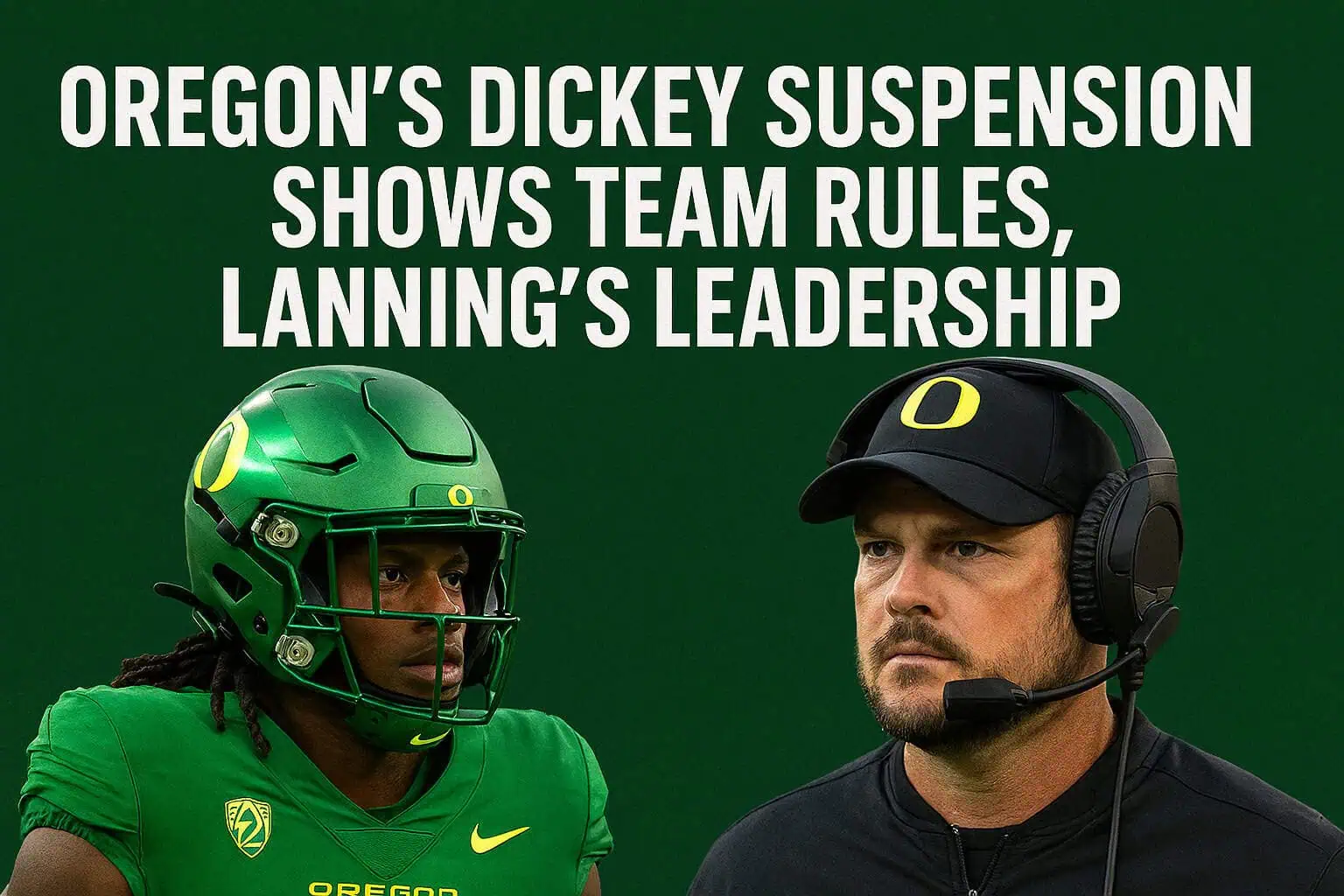
When Team Rules Meet Reality: Oregon’s Dickey Drama Shows College Football’s Harsh Truth

College football isn’t just about X’s and O’s anymore—it’s about discipline, accountability, and sometimes making the tough calls that nobody wants to make. Oregon head coach Dan Lanning just reminded us of this reality when he dropped the hammer on wide receiver Jurrion Dickey, and honestly, it’s about time someone in college athletics showed some backbone.
The Dickey Situation: When “Be Respectful, Be On Time” Isn’t Negotiable
Dan Lanning made it crystal clear during his recent media session that Oregon operates on just two simple team rules: be respectful and be on time. Sounds easy enough, right? Apparently not for everyone. Jurrion Dickey, the redshirt sophomore wide receiver who should know better by now, has been indefinitely suspended from the program for violating these basic principles of human decency.
“There are some pieces of that where I felt like he needed a break from us and we needed a break from that so we can focus on what’s in front of us right now,” Lanning said with the kind of diplomatic restraint that probably took serious self-control.
Let’s be real here—when a coach says both the player and the team need “a break from each other,” that’s coach-speak for “this situation got ugly fast.” The fact that Lanning refused to elaborate further, essentially shutting down any follow-up questions with a firm “I won’t spend any more time on that,” tells you everything you need to know about how fed up the coaching staff became with whatever Dickey was pulling.
Why Dickey’s Departure Matters More Than Stats
Sure, losing a wide receiver hurts any offensive game plan, especially when you’re gearing up for what could be a championship-caliber season. But here’s the thing that some fans might not want to hear: sometimes, addition by subtraction is exactly what a team needs. When you’ve got a player who can’t handle the most basic requirements of being part of a team—showing up on time and treating people with respect—you’re dealing with a cancer that can spread faster than good plays can heal it.
Dickey had opportunities. He had talent. He had coaches who clearly tried to work with him before reaching this nuclear option. The fact that Lanning wishes him “nothing but the best” and hopes he can “work his way back to being a contributor somewhere, whether it’s in Oregon or not” shows there’s no personal vendetta here. This is just business, and the business of winning football games requires players who can handle the absolute basics of being a decent human being.
The McNutt Injury: When Football Reality Hits Hard
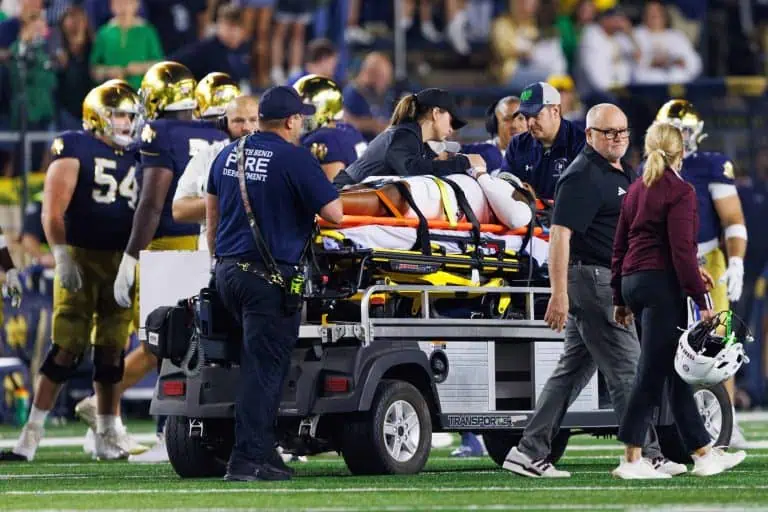
While the Dickey suspension dominated headlines, let’s not forget about Trey McNutt, the freshman defensive back who suffered a broken leg in what Lanning described as “a freak deal.” This kid was apparently having an outstanding fall camp before this devastating setback, and unlike some other recent Oregon news, this one actually hurts to hear about.
McNutt underwent surgery and is already showing the kind of character that Dickey apparently couldn’t muster. According to Lanning, the freshman is “working hard to get back” and “staying engaged in the playbook.” That’s what real commitment looks like, folks. When life kicks you in the teeth, you don’t sulk or break team rules—you find ways to contribute and stay ready for your comeback.
What This Says About Lanning’s Leadership Philosophy
Here’s what’s refreshing about Lanning’s approach: he’s not trying to be everyone’s best friend. He’s not making excuses or giving endless second chances to players who can’t meet the most basic standards of professionalism. In an era where college coaches often bend over backward to accommodate prima donna athletes, Lanning is establishing a culture where respect and punctuality aren’t suggestions—they’re requirements.
The “next man up” mentality that Lanning preaches isn’t just about dealing with injuries. It’s about building a program where no single player, regardless of talent level, is bigger than the team. When McNutt went down with his injury, the coaching staff didn’t panic or make excuses. When Jurrion became a distraction, they didn’t try to enable his behavior or sweep it under the rug.
The Bigger Picture: Building Championship Culture
What Oregon is doing here might seem harsh to some, but it’s exactly the kind of standard-setting that separates championship programs from teams that consistently underachieve despite having talent. You can have all the five-star recruits in the world, but if they can’t show up on time or treat their teammates and coaches with respect, you’re not going anywhere special.
Look at programs like Alabama under Nick Saban or Georgia under Kirby Smart—they’re known for having non-negotiable standards that apply to everyone from walk-ons to potential first-round draft picks. Players either buy into the culture or they find somewhere else to play. It’s really that simple.
The Timing Couldn’t Be More Critical
With Oregon’s season opener just 18 days away when Lanning made these announcements, the timing of both situations creates interesting dynamics. Losing Dickey at this point means the coaching staff has to adjust their offensive plans, but it also sends a clear message to every other player on the roster: the rules apply to everyone, regardless of how close we are to game time.
For McNutt, the timing is obviously terrible from a personal standpoint, but his response to the setback is already showing younger players what resilience looks like. Sometimes the most valuable lessons come from watching how people handle adversity, not from watching them succeed when everything goes their way.
Final Thoughts: Respect the Process
At the end of the day, Dan Lanning is trying to build something special in Eugene, and that requires making tough decisions that might not be popular in the short term. Cutting ties with Dickey sends a message that talent without character is worthless. Supporting McNutt through his recovery shows that the program values players who demonstrate the right mindset even when facing setbacks.
College football is littered with talented teams that never reached their potential because they tolerated players who thought the rules didn’t apply to them. Oregon appears determined not to become another cautionary tale. Sometimes being a championship-caliber program means making championship-caliber decisions, even when they hurt.